
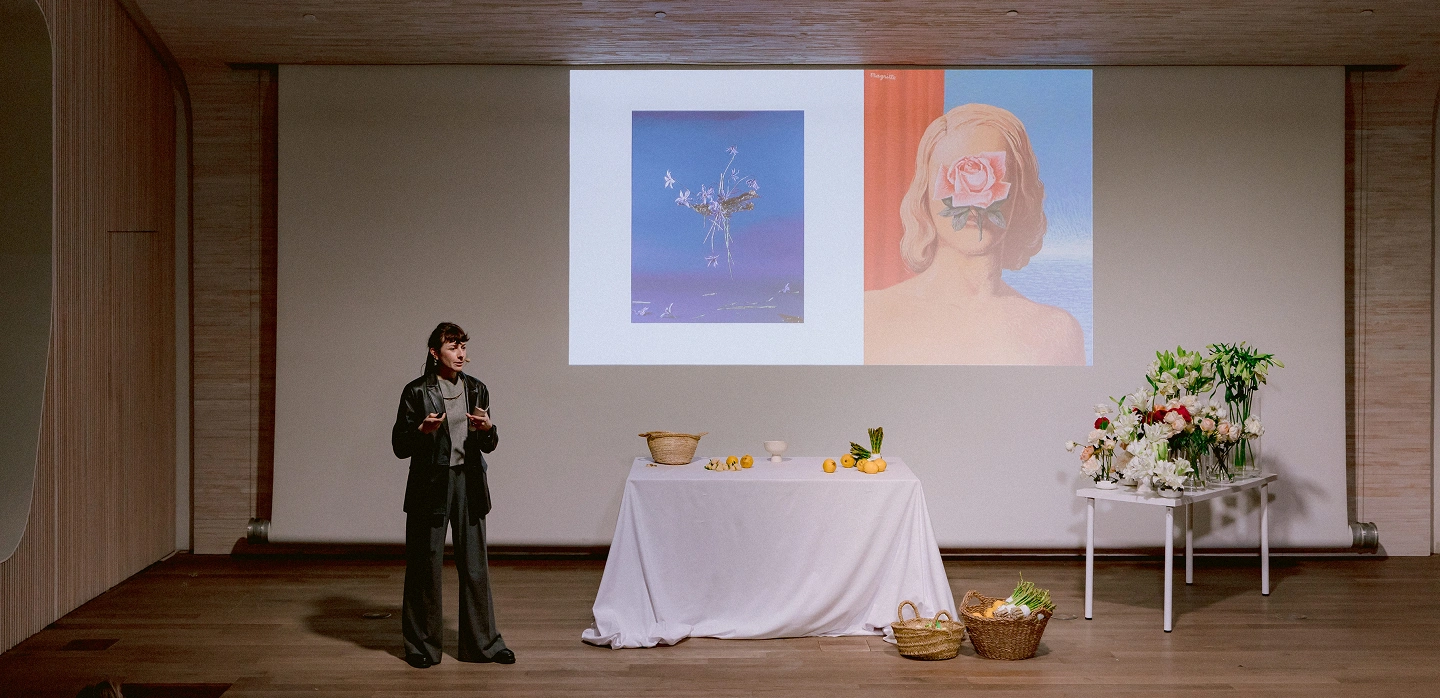
How did you get started in floral design?
It happened almost by chance. I moved to Madrid for a Master’s in Business and Sustainable Design at IED, nothing to do with flowers, though I grew up surrounded by art and design; my parents work in antiques and Italian design. Looking for a weekend job to learn Spanish, I came across Elizabeth Blumen’s studio in Kinfolk: very English, slightly decadent, unlike anything I’d seen in Italy. I offered to help, and eventually she took me on. I studied by day and learned flowers in the evenings. What I fell in love with was their expressive side: the meaning they held for each client, and their roots in culture and tradition.
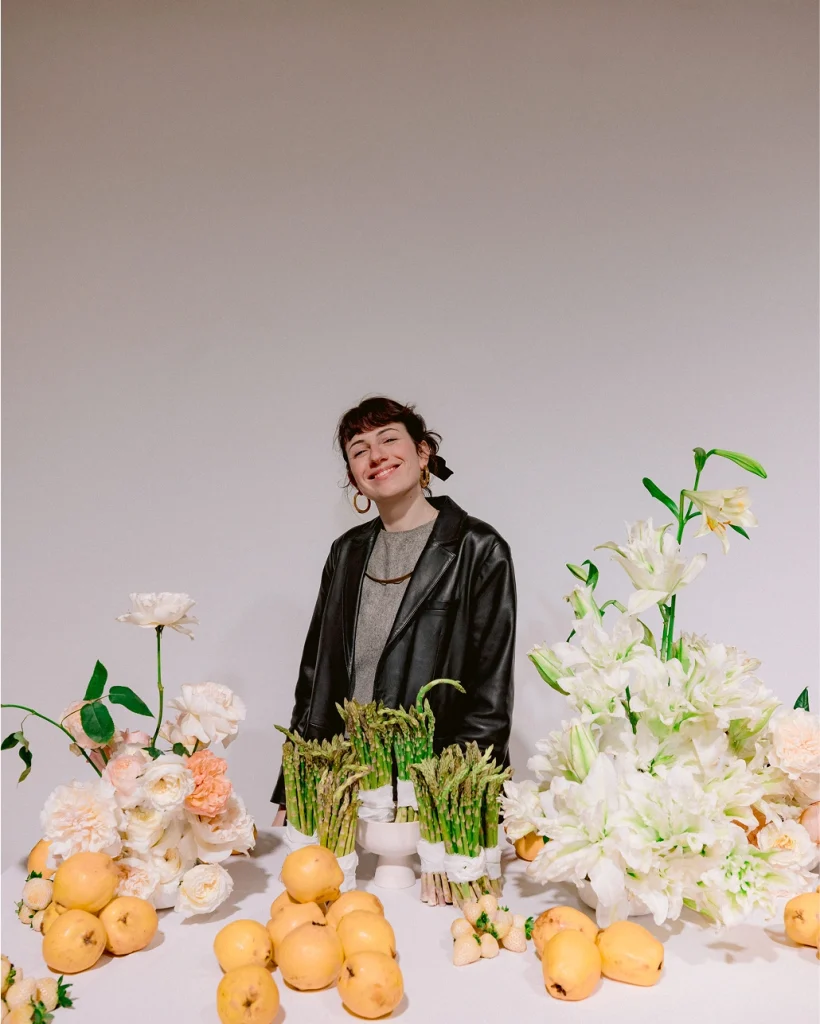
What led you to start teaching?
It all started with LOEWE Flores. Elizabeth Blumen opened the store and recommended me. I spent three years there, alongside flower markets, the Flora Festival, weddings and editorials, and fell in love with Madrid’s floral world. Teaching came naturally: the store sat at the building’s entrance, people watched us work and wanted to learn. I began with courses for LOEWE clients, then opened them to everyone. After three or four years, I felt I’d done everything Madrid had to offer. I found London Flower School, fell in love with it, and was offered a teaching position. That’s where I finally developed my own style.
“I want there to be a reaction, but not one that’s disruptive; something organic that merges with the surroundings.”
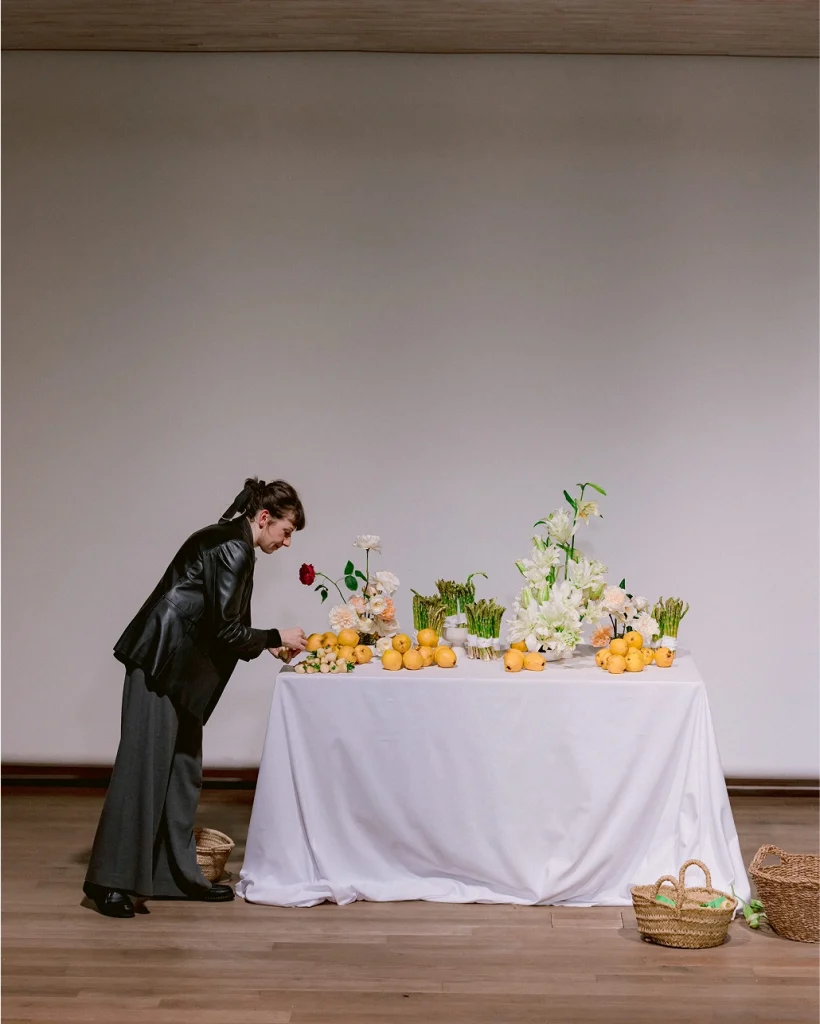
What is your signature style when designing with flowers?
It depends on the season; my style has evolved a lot in recent years. Right now, what matters most to me is the choice of materials: few, carefully selected, each with its own aesthetic weight. I work in groupings so the essence of each flower stands out, and shapes and lines are key. I approach installations, large or small, in a very photographic way, like an image within a frame where the arrangement is part of the composition. I always bring in fruit, vegetables, props or other materials, and use the florals to complement the space. I think a lot about composition: if the surroundings don’t work, everything becomes harder. I need a clear story behind it.
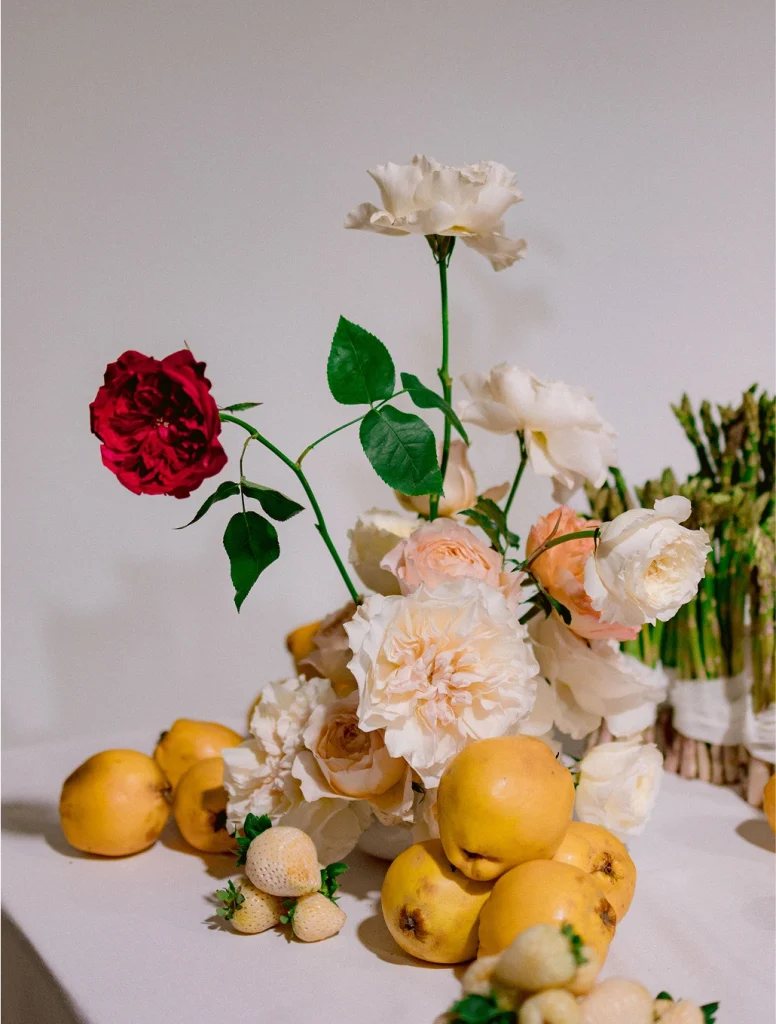
What are your main sources of inspiration?
Food was a great inspiration for a long time; there were periods when I enjoyed creating with food more than with flowers, though I’ve since come back to them. But my main source of inspiration is tradition. I love seeing how floral art has evolved century by century, with very different aesthetics deeply tied to what society was living through at each moment. With weddings, for example, I love looking at what was done in the past. If I’m working in a place with historical weight, I research how flowers were used when it was founded; if it’s an industrial space, I try to go beyond the building. My inspiration is tied to the history of floral art, to tradition and to the craftsmanship of each place I work.
What’s been the most significant lesson in your career?
We all have something creative inside of us. It isn’t true that some people are creative and others aren’t: it’s something you cultivate, through practice and through making. Some people take longer to discover it; for others it’s an essential part of who they are. There are times when ideas come easily and my style moves forward with coherence, and others when I feel I’m in a desert. I’ve learned that I need to experiment and give myself time to try new things. I often look at the work of someone I admire and try to make it my own; if it works, I keep going. If I don’t stop to observe the details and try things, my work doesn’t evolve.
Are there any emerging trends or innovative techniques that you find particularly exciting?
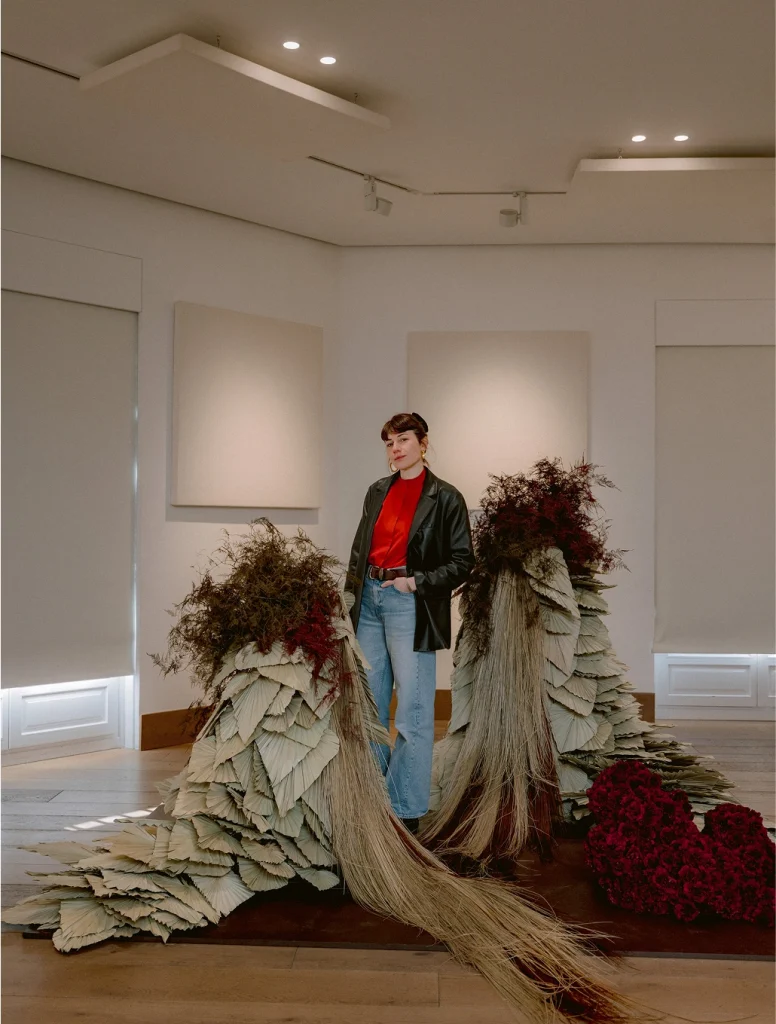
I don’t think it’s so much the innovative techniques that excite me, but rather the techniques from countries I haven’t visited. For example, the work done with bamboo in Asia, or the work with leaves in Thailand, Indonesia… these are things I don’t know how to do, but I’d love to experiment with them. I need to take courses to learn more. In Japan, for instance, I’d take a course on bamboo structures. What excites me most are the artisanal techniques from traditions in countries far from Europe. There are things that we might not think of as part of floral art, like the technique of basket making, and that’s something I’d love to incorporate into floral art.
What sustainable practices do you incorporate into your daily work as a floral designer?
I don’t use floral foam, even though it’s still very common. In England, most designers no longer use it, and I’ve become so used to working without it that I couldn’t go back. I work with chicken wire or kenzan, which also give a better aesthetic result. I love working with flowers from local farms, which are beautiful; there are incredible farms here in England. And I use seasonal flowers, because anything that adds to sustainability adds to the work itself: it gives the arrangement more meaning and purpose. I don’t understand why sustainability isn’t more fashionable, especially from an aesthetic point of view. The end result is simply better.
What do you want people to feel when they see your work?
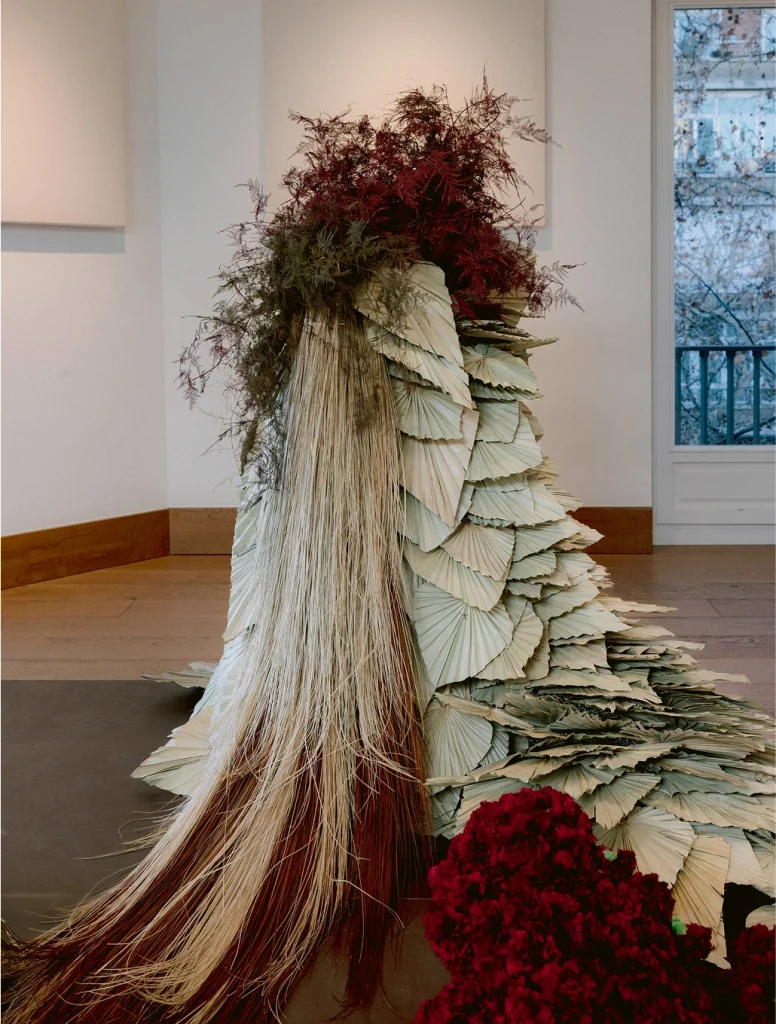
It’s quite obvious, but I want them to feel good. I want it to feel something very essential, connected to the beauty we all have inside. I don’t necessarily want what I do to be “pretty” in the most superficial sense of the word; I’m not interested in making something just “pretty”. It has to be something that makes an impact. I want there to be a reaction, but not one that’s disruptive, rather something organic that merges with the surroundings, that’s part of the experience the people are living at that moment. I don’t want to create an isolated experience; I want the flowers to complement what’s already happening.
PHOTOGRAPHY BY FACIBENI PHOTOGRAPHY