
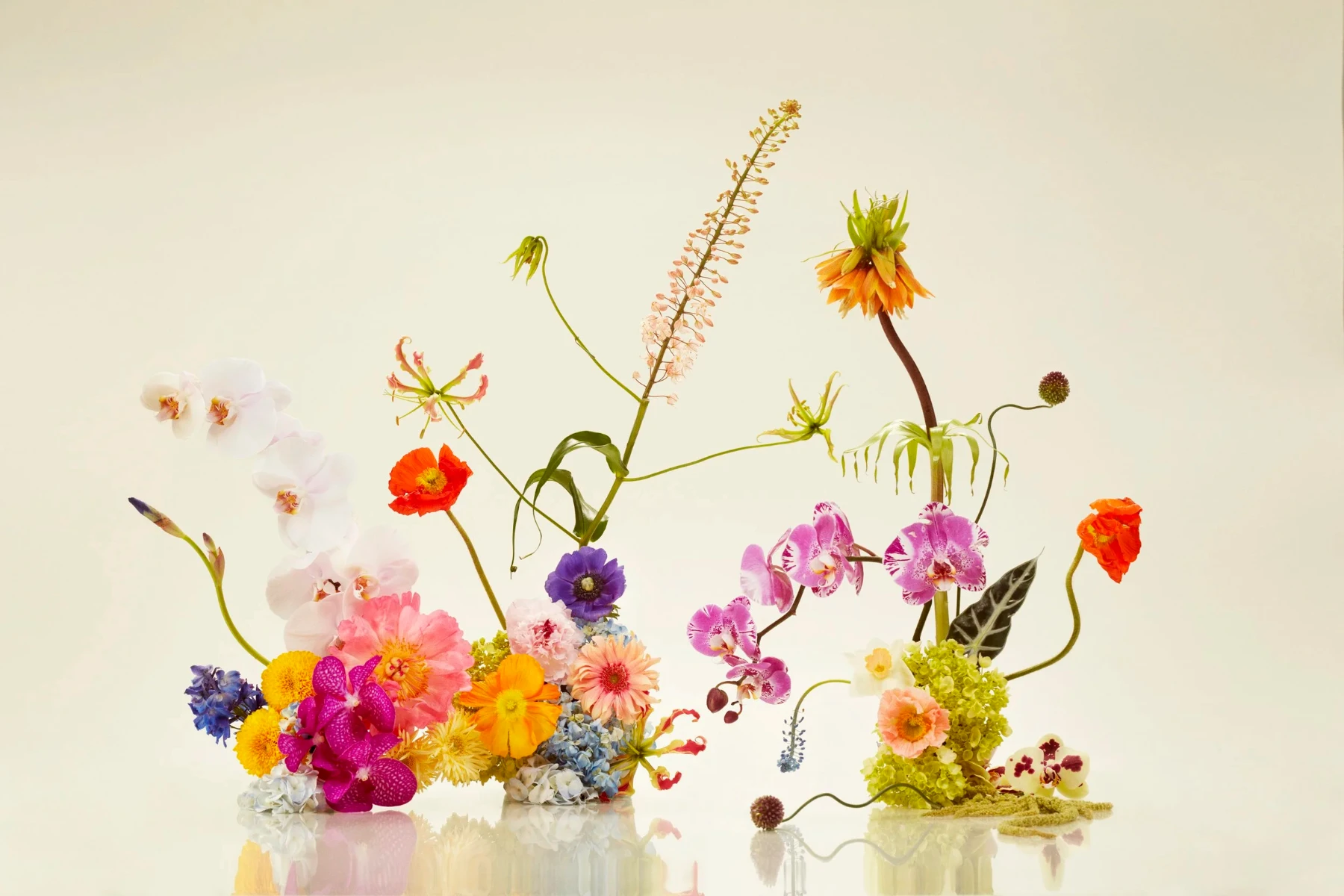
How would you describe your characteristic style? What makes it unique?
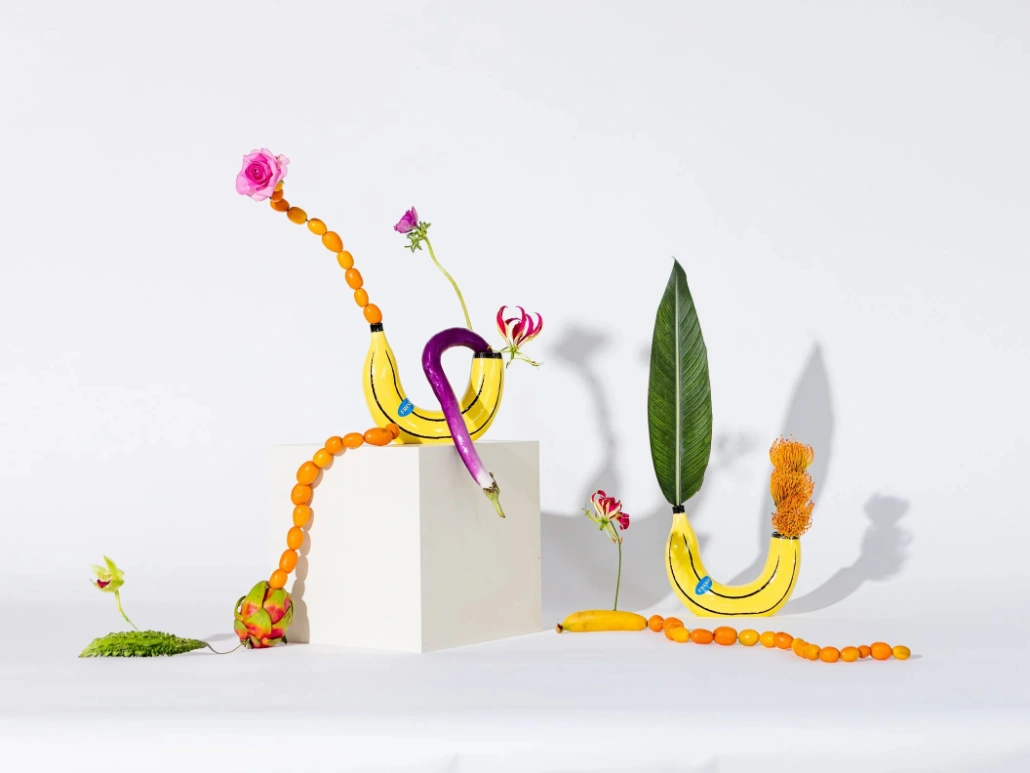
I think it is a mix between minimal but at the same time very colorful and graphic and unstructured, almost messy but at the end it is quite balanced. It’s not English, it’s not French, it’s like a sort of crazy Ikebana, maybe like an Ikebana with colors that would not be used in Ikebana. I also think that I play a lot with negative space and contrasts. The vase is very important. My style kind of developed because I designed my own vases and it went from there. I really started from the bottom up, from the vase, and then the flowers.

So there is a mix of visual languages in your work, do you think that comes from having lived in various countries?
I think so. In Latin America everything is colorful, like Andean textiles, and people mix strange colors fearlessly. That’s where something in me comes from. I love the Mediterranean aesthetic, but I can’t make it my own. I love minimalism, but I always need a counterpoint: if something is white, I need a black vase. I learned technique from Donna Stein, who is Australian, and learned to work with flowers in Europe. My work then became minimal on its own, and I realized that came from Ikebana. My style is a fusion of those three. I also studied design, so the vessel matters deeply to me. It’s all one piece.
What draws you to abstraction?
I love negative space. I’m not a fan of opulence. In the West, stems are often packed so tightly you only see the flower heads, and there’s no air. Abstraction draws attention to the stem, one of the most beautiful parts of the flower, and to the background, because you’re creating a void. It’s also about the final photograph. My work has moved more into advertising than events, so the background color and the final image always matter.
“I want my students to stop thinking you can only make a bouquet. I want them to think beyond, to see the beauty of the stems.”
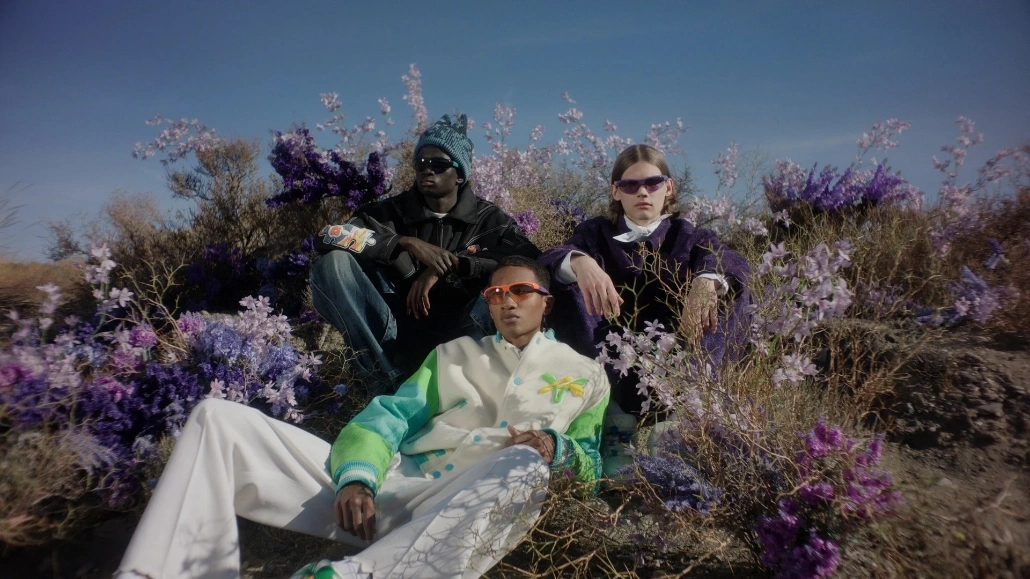
I see you have collaborated with Laia Benandes, what is the dynamic like with the photographer on set?
At first I was quite closed with photographers. I’d build a set and want it exactly that way. Over time, working with photographers like Laia, I’ve realized the value of a different gaze. It’s lovely when the photographer brings an idea and you build it together. Above all, it’s their power with light. Lighting is everything. Something can look completely flat, and then they work wonders with it. I love that dialogue.
You also teach, what do you want people to take away after your workshops?
I want them not to be afraid to cut the flowers, so I teach different ways to cut the same stem. I want them to see flowers as a creative tool, like drawing or painting, to think beyond the bouquet and see the beauty of the stems. I always focus on the vase: color, shape, and how the same stem changes with each vessel. Then they set an intention, from an emotion to a color, and give their arrangement rhythm.
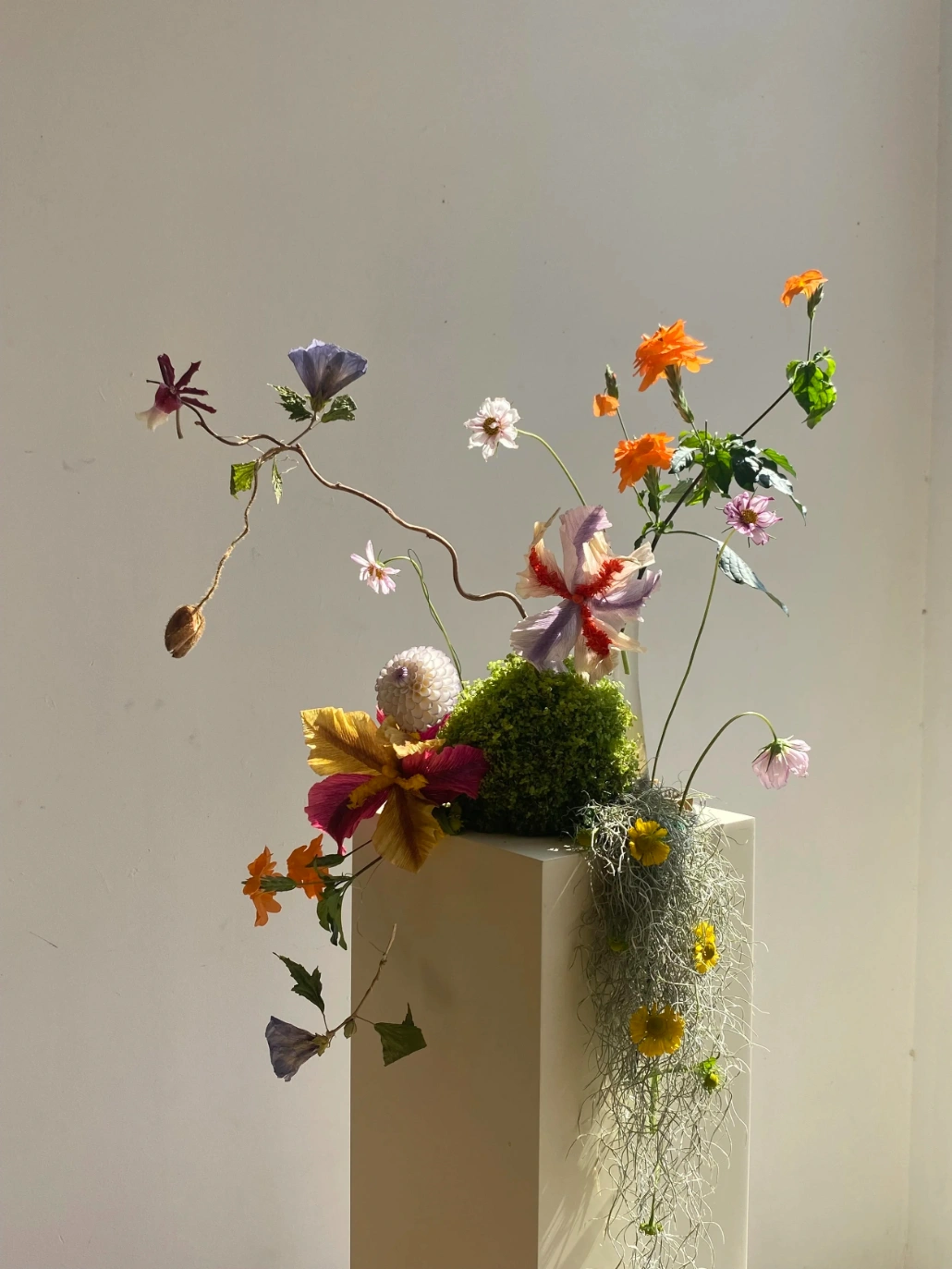
In what way on a more holistic level?
I’m interested in Goethe’s The Metamorphosis of Plants, which relates each flower to a planet. Venus flowers, for example, are seen as feminine and share the shape of the uterus. Infused in a drink, they connect you with the feminine, so there’s a whole herbal side too. The idea is that what’s down here is connected to what’s up there, and every flower holds a planetary archetype. My classes draw on this philosophy, and our arrangements grow from those intentions.
Is there a project that changed everything for you?
I worked in a hotel for seven years, where I learned my technique. Then I got bored and needed to do my own thing. I could compose just like my teacher, and I was terrified of copying her. I value individuality, and I admire florists who develop their own style. So when I left, I started making ceramic pots and selling cacti in them, ready to go. Ten years ago nobody did that. I didn’t want plastic; I wanted the ceramics to matter. From there I began making arrangements with my vases, and shop windows started contacting me through Instagram. That’s how it began.
What is a project you’re especially proud of?
There is one that stands out. I did a project a few years ago for Louis Vuitton in the desert. The production and installations were huge, large-scale, and the design was incredible. I was proud of that project, it was a challenge. I had never worked on something like that before, and we used artificial flowers, which was new for me, but it turned out great. I feel most proud of my work when I do something different, when I try something I haven’t done before.
Do you have any tricks for someone starting out in the business?
Let me think … I think the most important thing is teamwork. Understanding that many pieces are working together to create something. Especially in advertising, you’re part of a whole team, and everything has to come together. Like I mentioned earlier, I used to be more closed off to collaborating with photographers, but I’ve gained a lot from doing so, so it’s important to stay open, collaborate, and see the value in other perspectives. That’s something I’ve learned over time. It’s real life, and it also helps you learn more.
What do you want people to feel when they see your work?
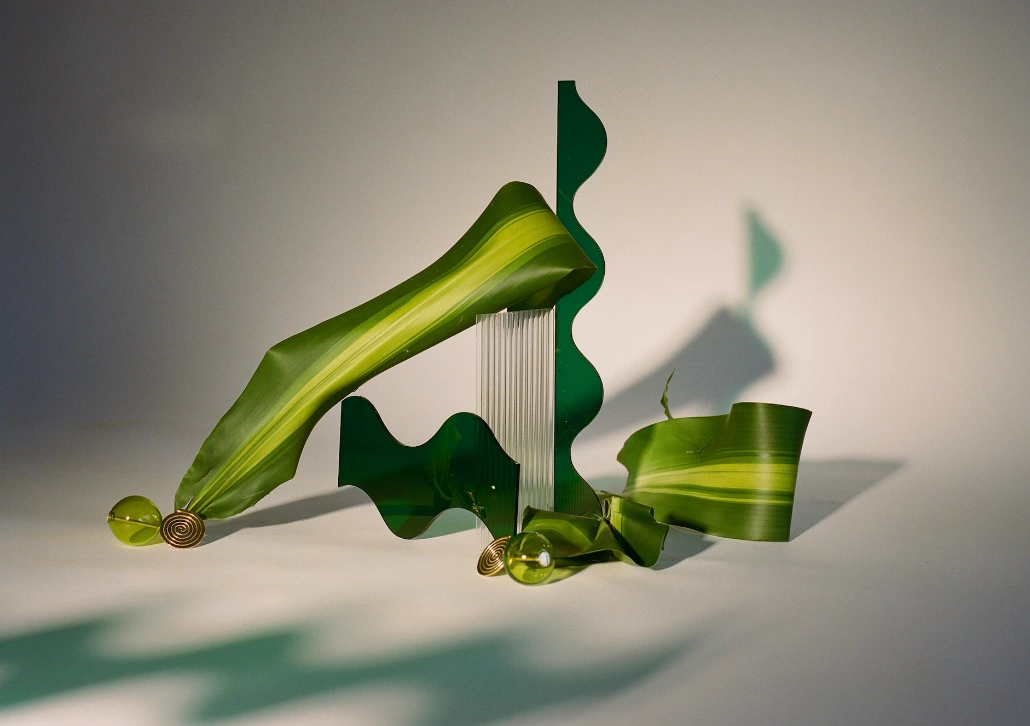
I think I want them to wonder what they’re looking at, to analyse each bit of the flower taken apart. For them to be curious and examine what is real and what is not. It puts flowers in a new light. I’m interested in these kinds of fantasy arrangements, for example, I’ve been making glass stems lately, and I love playing with the idea of reality and non reality. Which flowers are actually like that? I want them to question what is real and what is fantasy.