
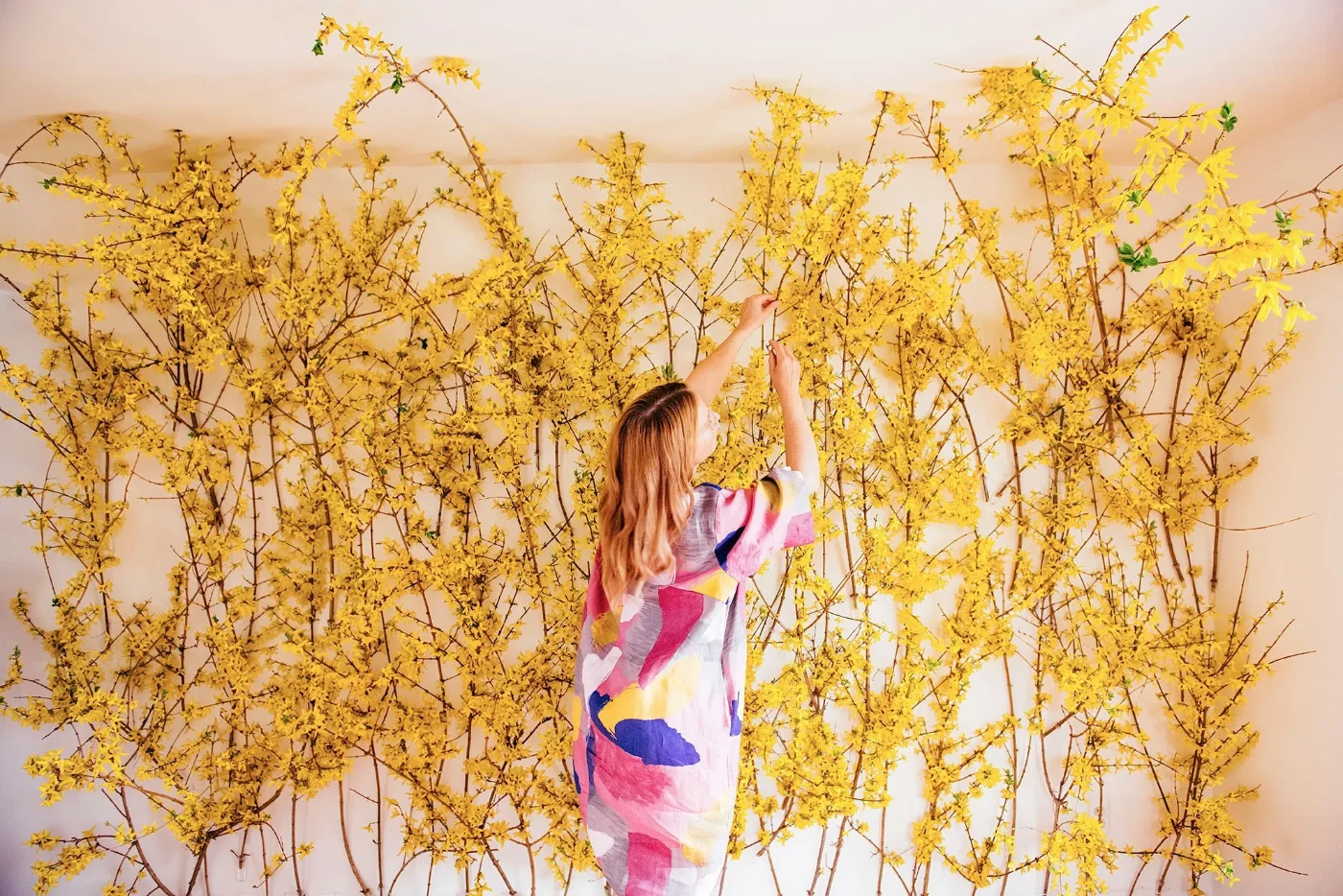
How would you describe your signature style?
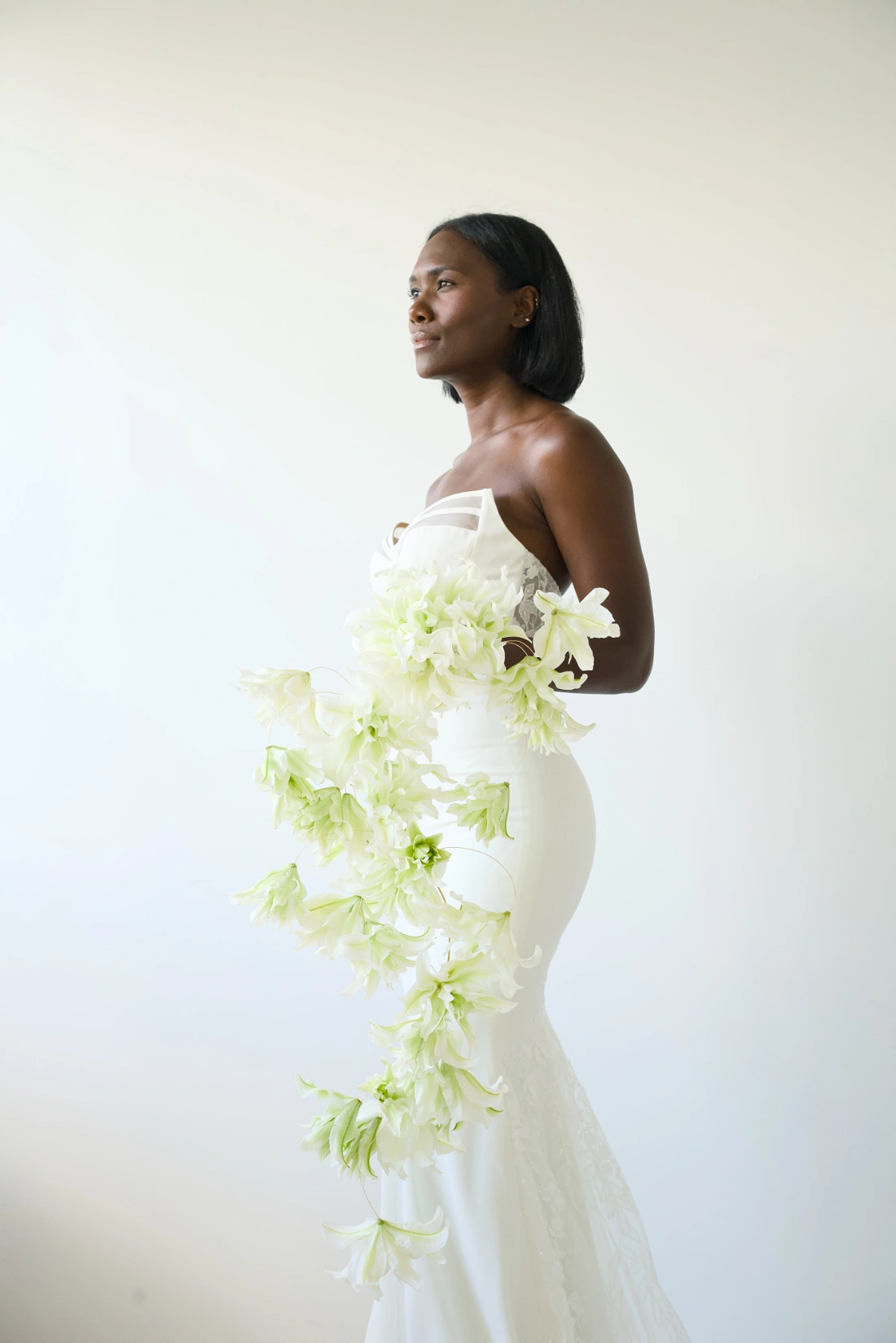
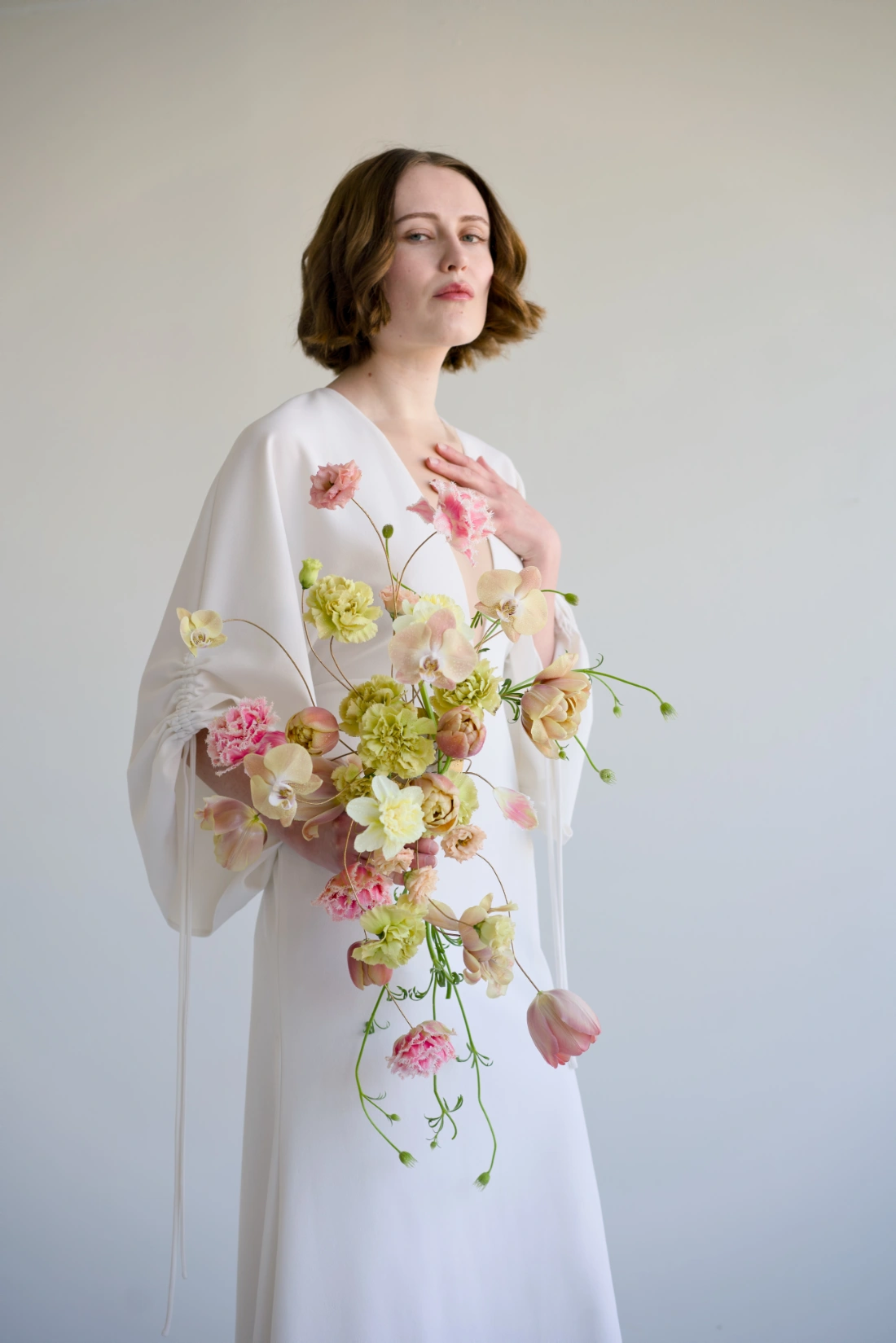
That’s a hard question! I suppose I really enjoy allowing the flowers to be the focus, not the structure, the armature or the support. I love taking a material, stretching it to see all the possible things it can do, and then displaying it in a way that I feel highlights its form and color best. I think I’m still evolving, but I’d say modern, flower forward, and simple in a way.
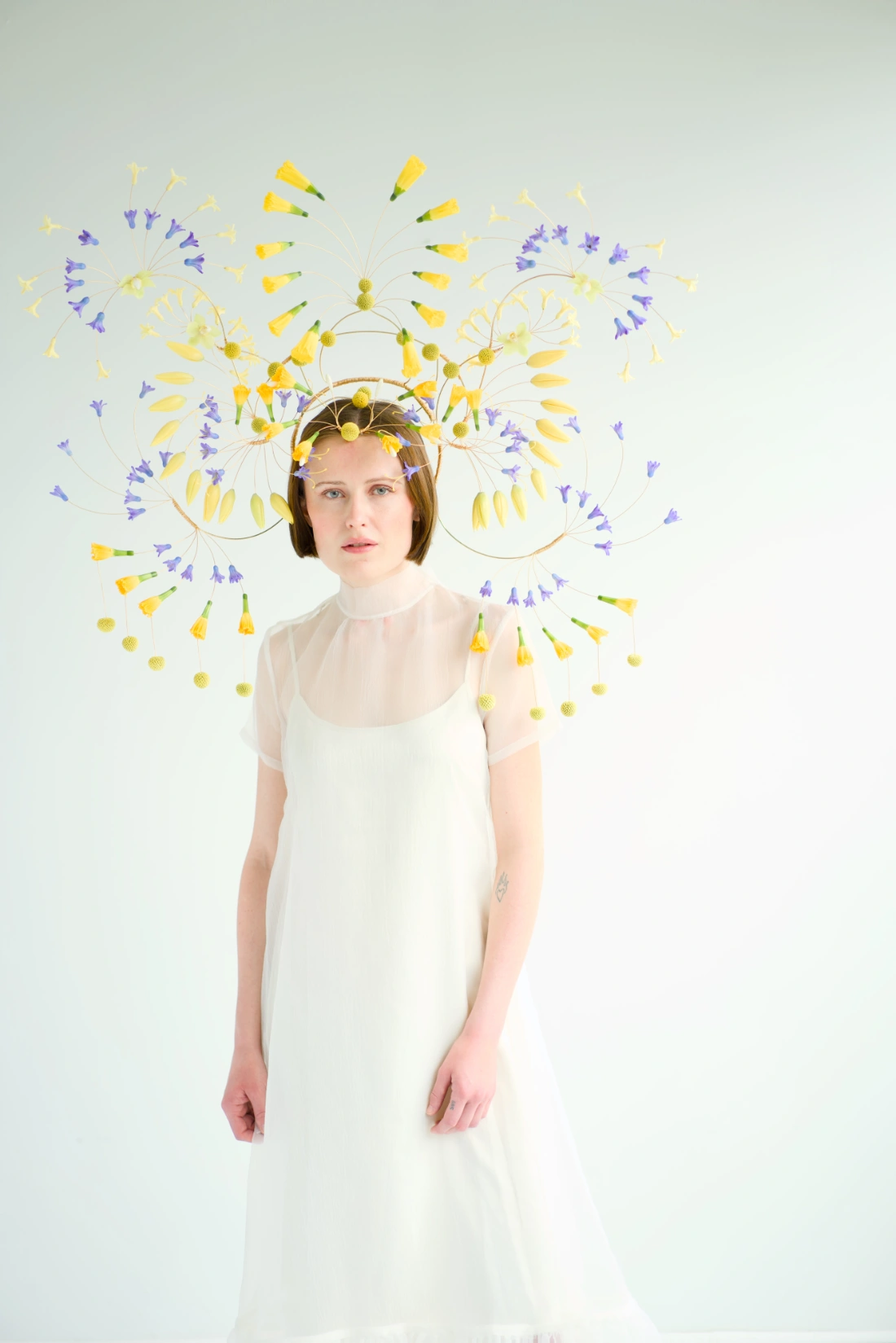
The flower forward part is so interesting, because you treat flowers the way a more traditional artist treats their raw material. How did your relationship with the material start?
I got my start making jewelry, and friends who were getting married asked me to do their flowers. So I got into wedding floristry without knowing anything about the profession. After several friends’ weddings, I got a proper job at a flower shop, so I’ve done retail floristry as well. I did that for several years until I got up the courage to have my own studio, which was a wedding and event studio for years.
Now you can see a picture of your work and just know it’s yours. How did you go about finding your floral voice?
You have to give yourself time to develop your own taste and really think about what you’re attracted to. It took me many years. I did a lot of copying and shape-shifting to make things I thought people would like. But there came a point when that was no longer exciting or fulfilling. Françoise Weeks was one of my early examples of someone who had departed from the typical commercial wedding look. She was treating floristry as an artist would treat their art. That gave me the courage to explore different ways to express my point of view, and it just took me over.
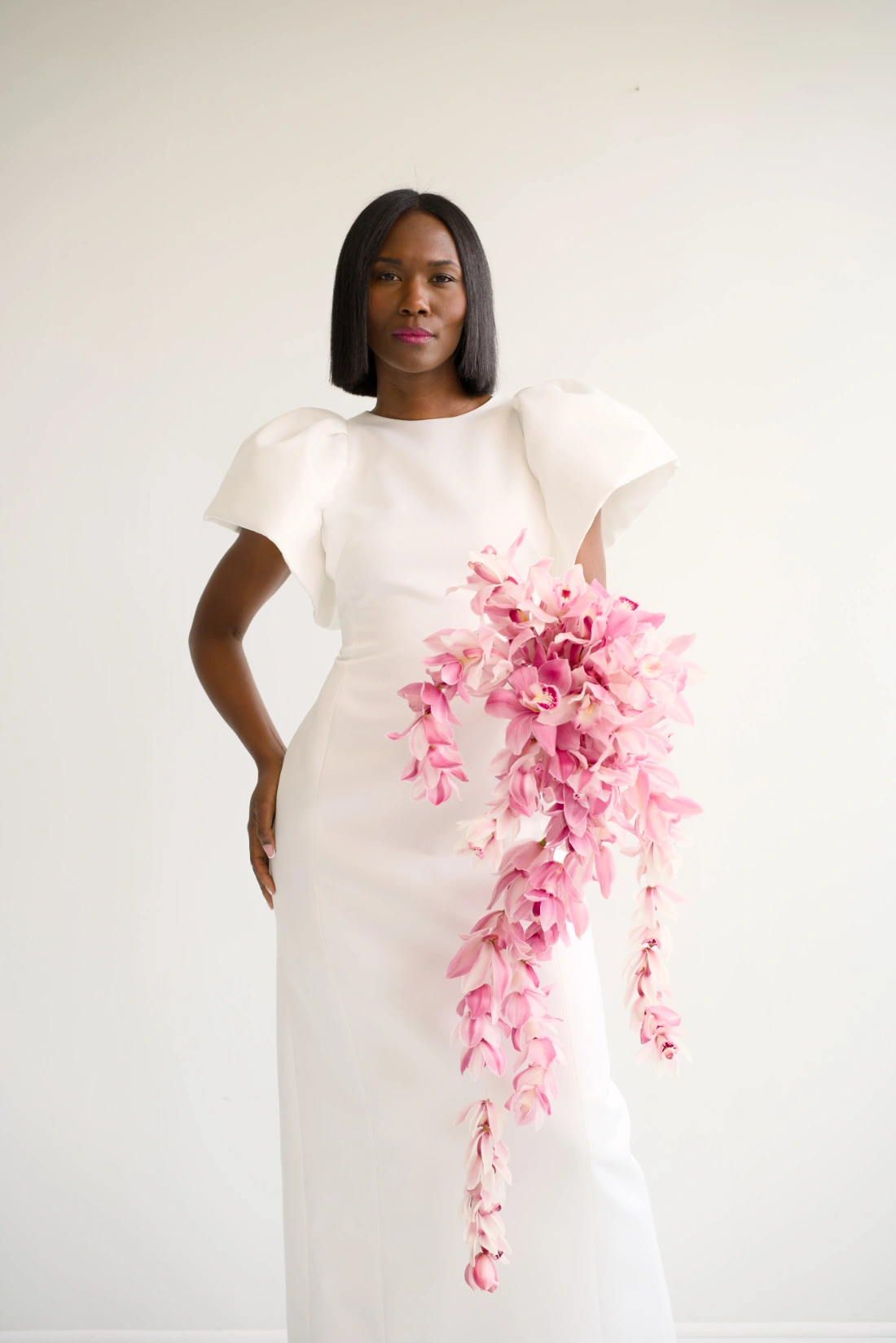
What do you want people to take with them after one of your workshops?
I want to equip them with processes, repeatable techniques and creative frameworks that will allow them to go back into their studio and make the things they are imagining. How to take something from concept to completion, not just how to copy the idea I’m sharing. I’m hoping to offer something a little deeper. And I want to welcome people into the rabbit hole of master floristry, to see what can be taken from those traditions and handiwork skills and applied to modern commercial floristry.
You’ve taken part in a lot of conferences. What do you think is the biggest value of educational spaces like MADRID BLOOMS?
I think it’s very important to step away from your own business and your own way of doing things, and free up some creative headspace for other ideas to come in. It’s like taking time to meditate. We have to break out of our normal patterns and our normal activities. Once a year is ideal, or more often if you’re lucky, to hear other points of view and see what other people are working on. I think it’s the best thing you can do as an artist. It’s a recharge, a way to build community around the globe, and a way to keep elevating the profession.
“How to take something from concept to completion, not just how to copy the idea I’m sharing”
So many florists tell us they set aside time for one congress a year. Do you still go to them as a student?
I do! I recently completed a master floristry program at Boerma, and Mike Boerma is hosting a tour in Japan next year. I’m already setting aside money for it, because we’ll be touring and learning from Japanese master florists. I would love to do more as a student. You can become a total pro in one aspect of floristry, and there’s a whole new world where you don’t know anything.
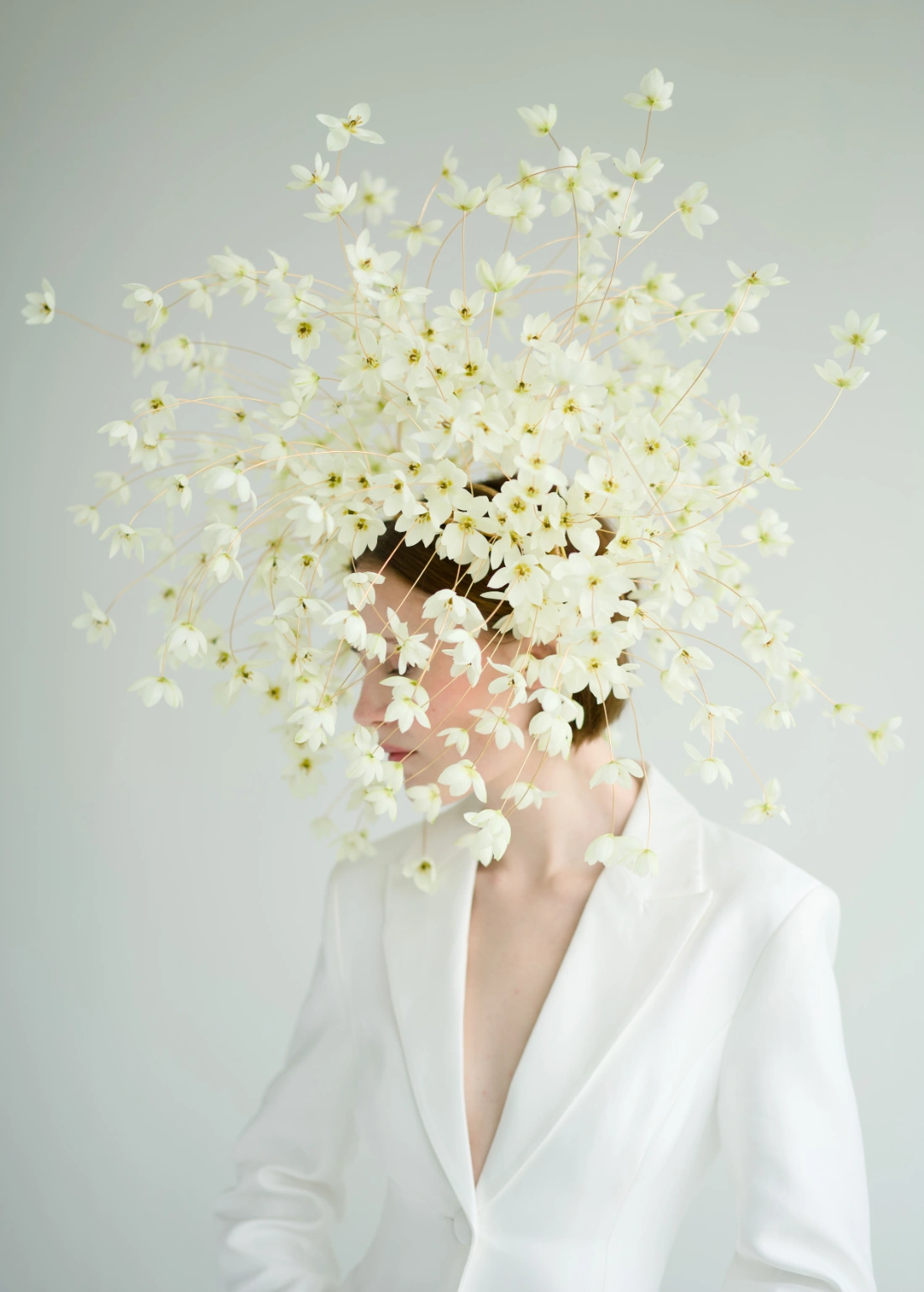
Since you became more dedicated to education, is there a project or a moment that marked a before and after in your career?
Definitely, though not a moment in time so much as a period in time. When I finally had the space, personally and financially, to study to be a master florist, to get those handiwork skills and the deep theory and construction principles, it completely changed my trajectory. It’s turned into a physical product that I now have a patent on, and I’m working on creating a line of armatures. I don’t think that would ever have happened if I hadn’t taken the time to study master floristry and really hone in on what I wanted to do as a creator.
When will it come out?
It’s been quite a challenge. Creating a product is very different from creating courses. I’m doing it myself in my studio, buying the machinery and setting up a kind of micro factory. It’s been two years in the making.
Where are you finding inspiration at the moment?
The pain points of floristry are my major creative wellspring. I love being online, I love Instagram, I love Pinterest. It feels like a million little puzzles waiting to be solved. I get inspiration from everywhere, but really it’s asking: what’s the most refined way to create the thing I’m seeing, or the thing people want to make? That puzzle is endlessly interesting to me.
It leads to a testing or exploration period that hopefully ends in a solution. So my major source of inspiration is modern floristry: challenging rigid thinking and conventional ways of doing things, and offering something helpful that is still beautiful and relevant.
You’ve been in this industry for a while. How has it changed since you began?
Totally. One of the things that has pushed me along is how limited floristry was viewed when I started. Everyone warned me I would never make any money, or teased me, as if it were a low-skill, low-wage profession. I knew that was wrong instantly, and it really fired me up, because I recognized I had found the perfect medium to express myself. Floristry at the time was very rigid. I’ve been pushing against what the public views floristry to be, I want to get them to think more about what’s possible, and enjoy floristry as an art form, not just a service.
Now that you’re internationally recognized, has there been an “I’ve made it” moment?
Funny you say that. I recently received a dream commission, and after about a month of work, they canceled. It was a big learning moment, because the truth is, those aren’t my people. My people are florists, completely and truthfully. That’s who I’m inspired by, and who I’m busily trying to create these things to help.
What are the sustainable practices you incorporate into your daily work?
My studio mantra is reusable or compostable, though I’m breaking it a little with all my wire work lately. When I’m creating installations or large centerpieces, I ask: can I buy well-made structures that I can use again and again? Can I put the materials into water? Can I reduce the number of water tubes I need? With the wire work, I feel a little conflicted. The armatures I’m making produce less waste than conventional methods, but they’re still single use. So I’m trying to refine, reduce and remove as much waste as possible, while still producing things that feel artful and are functional.
When people see your work, what do you want them to feel?
I want them to feel surprised, and a little bit excited. I just want to pique curiosity, really. If it’s a florist, I want them to think, “Oh, that’s interesting,” because it’s so pared back, or because they can’t tell how it’s constructed, or because it’s a different way to look at that flower. If it’s the public, I want them to see flowers in a new light, so they expand their view of what floristry is. It’s really about curiosity. Curiosity is my driving principle.