
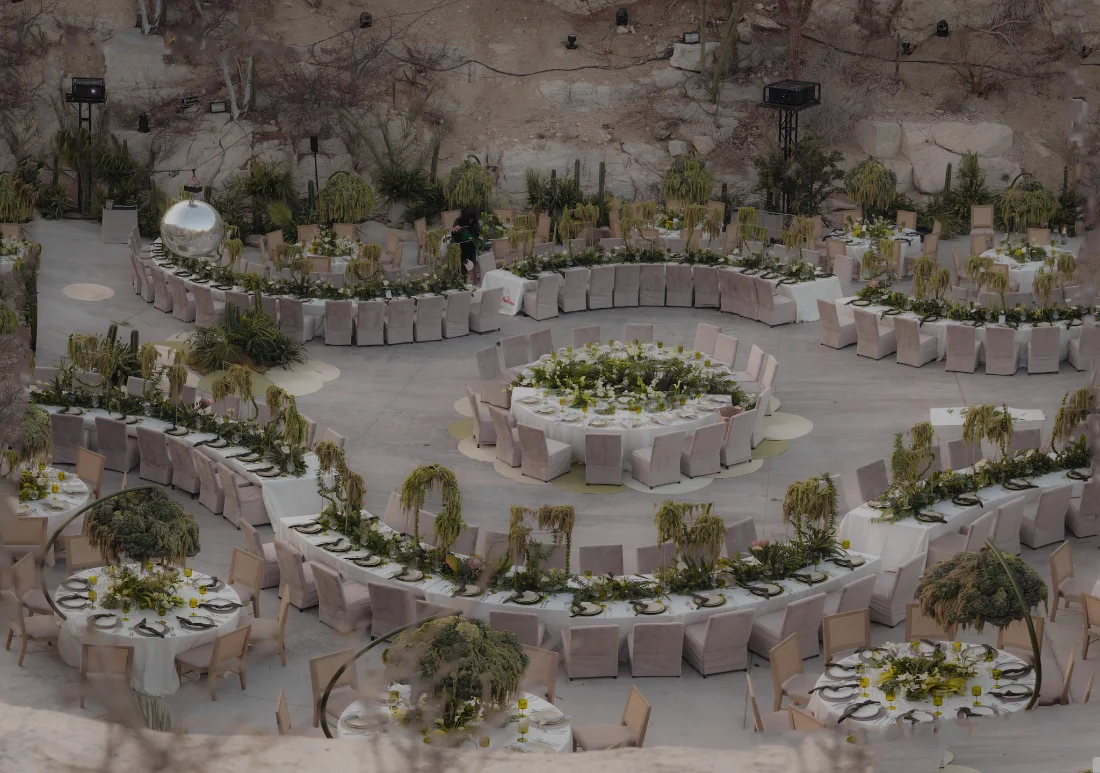
How would you describe your floral style?
I feel my style is very multifaceted, very adaptable to each type of client. But in the end, my vision is always to create pieces that, beyond looking beautiful, make people feel something. I love experimenting with different materials and textures. I don’t like doing things that are too conventional. I like everything we make to carry the essence of the brand, even though we work for so many clients. So yes, I think my style is ultimately multifaceted.
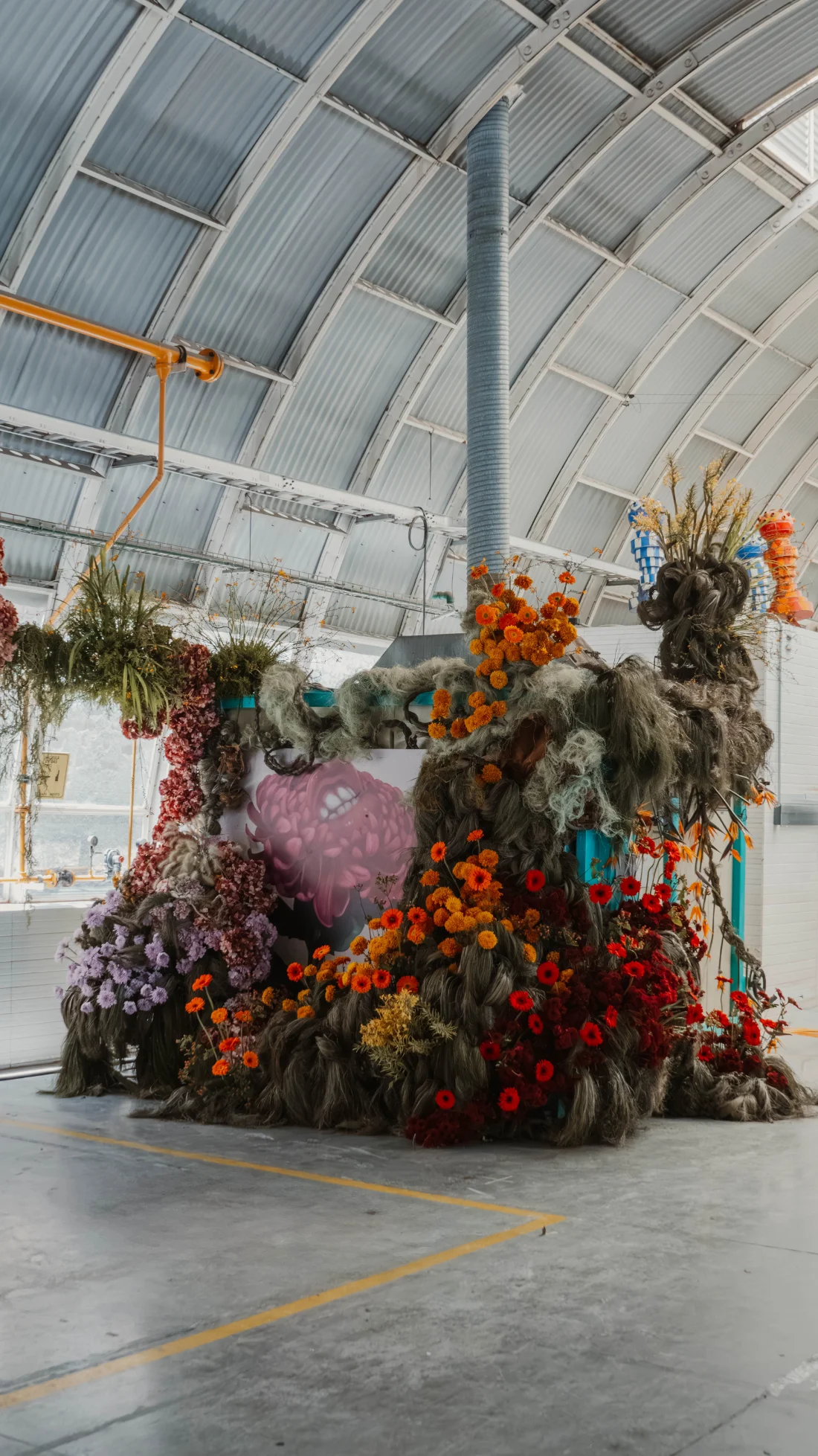
You started out working for another company and gradually built your own brand. How do you think you managed to stand out in the industry?
I started 16 years ago. While working at an event décor company, I discovered that flowers were what brought the magic to a space. Luxury weddings didn’t exist yet in Mexico, so I started knocking on doors with a mini catalogue and a lot of pitch. Eighty percent of my growth came from word of mouth. With the flowers from each order, I would first make something to my own taste, photograph it, and that’s what I showed people, until they started daring to try different things. The door that was hardest to open was Mauricio Kirschner’s. I kept insisting on him for a year, until he finally said yes, and we went on to work together for five years. That gave me instant recognition.
You didn’t learn the traditional way. Who inspired you or guided you along the way?
In my case, my greatest teachers were the florists who worked with me. In Mexico, the work is done very differently from Spain or the United States, where floral designers with a more artistic profile are hired. Here, florists often come from very humble backgrounds. They’re men in their fifties, extremely hardworking, who may not have a highly developed personal style, but who have spent their whole lives among flowers. They’re experts, and they’re also blacksmiths and carpenters; they climb incredibly high scaffolding and build aerial installations.
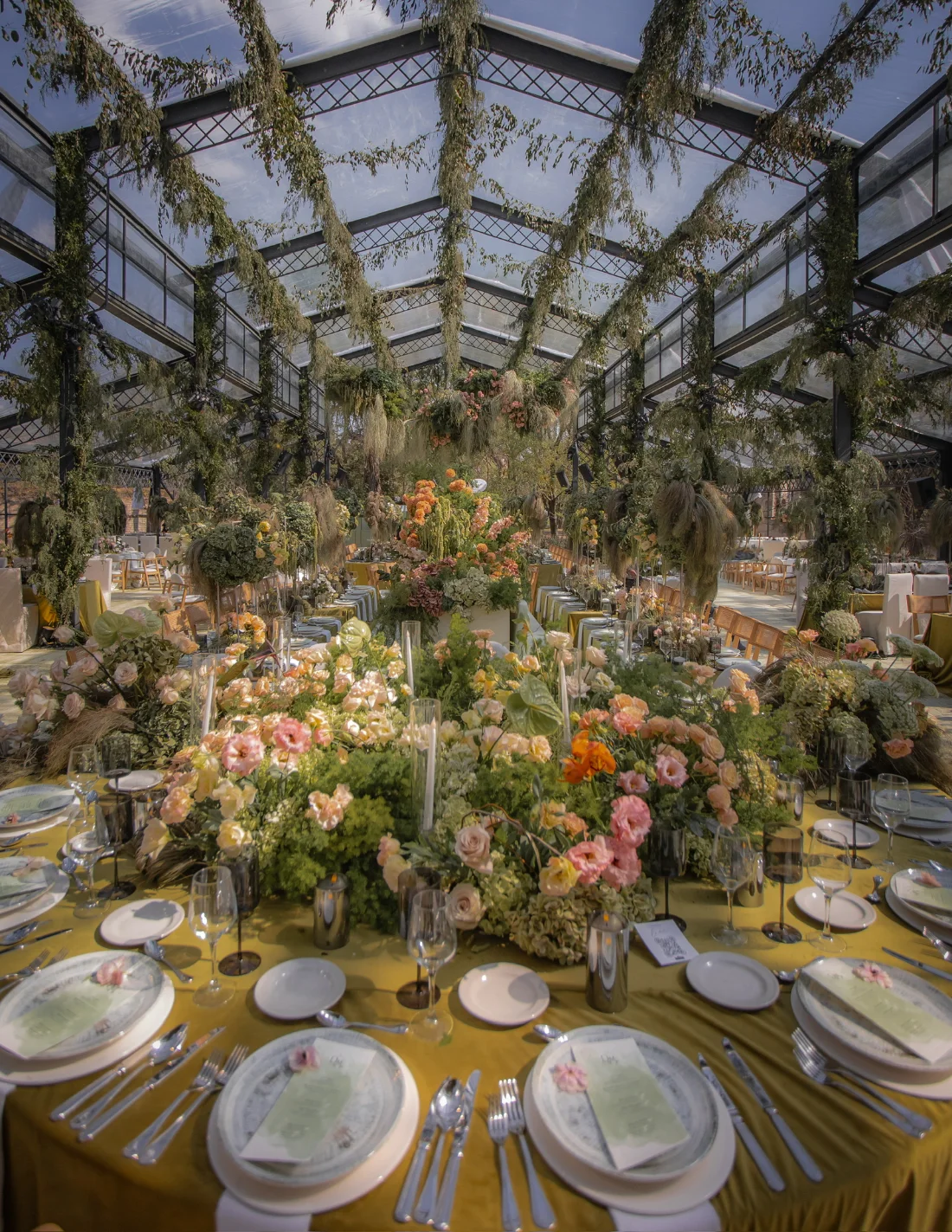
How did you start building your team?
The same people who inspired and guided me, taught me everything they knew. It was a huge opportunity. I shared my aesthetic vision with them, they gradually understood it and made it their own, and I learned from them. We taught each other.
“We can feel that by teaching our team so much they’ll betray us, but my greatest wish would be for people to dare to delegate, to trust a team.”
With such a large team, how do you organize everything so your style stays consistent?
I’ve had to turn my creative process into manuals, training sessions and very practical tools, so the whole team designs with the brand’s signature. We’ve built an in-house team with the help of external consultants, who would tell me: “You need someone with this profile for purchasing, or this other profile for sales.” There’s a marketing team that always looks after the brand. I’m sure the person who serves our clients does it as if they were me. And that’s really wonderful.
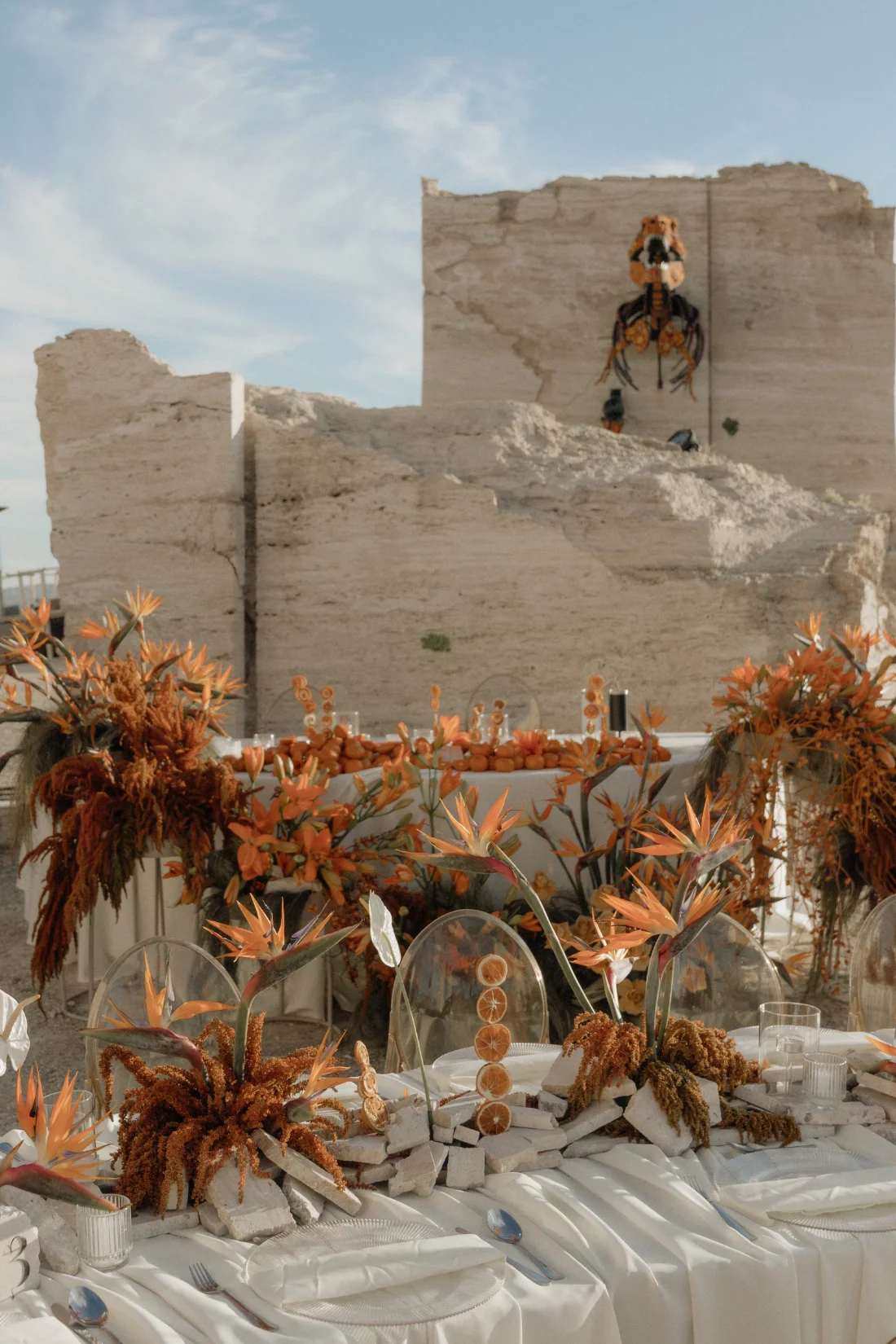
What would you like students to take away from your workshop at MADRID BLOOMS?
I want them to understand the importance of having a team. Because in the design world, even if your brand isn’t named after you, the artist always carries a lot of weight and finds it really hard to delegate. Especially because sometimes we can feel that, by teaching our team so much, they’ll betray us, right? That people might take everything, leave and do the same thing. But I think my greatest wish would be for people to dare to delegate, to trust a team, because it’s the only way to grow and to have a life outside of work. Otherwise, you’ll spend your whole life working.
What do you think learning and educational spaces like Madrid Blooms bring to the industry?
I love these spaces. For me, the main thing is being somewhere you can hear so many opinions and so many ways of seeing and thinking, not only from the teachers, because you’re also surrounded by students who share as well. I think it’s a way of not feeling alone on the journey, of knowing where you stand, because sometimes you feel lost. It’s a space where you can recognize your weaknesses and your strengths, and also be part of a community you know you can come back to.
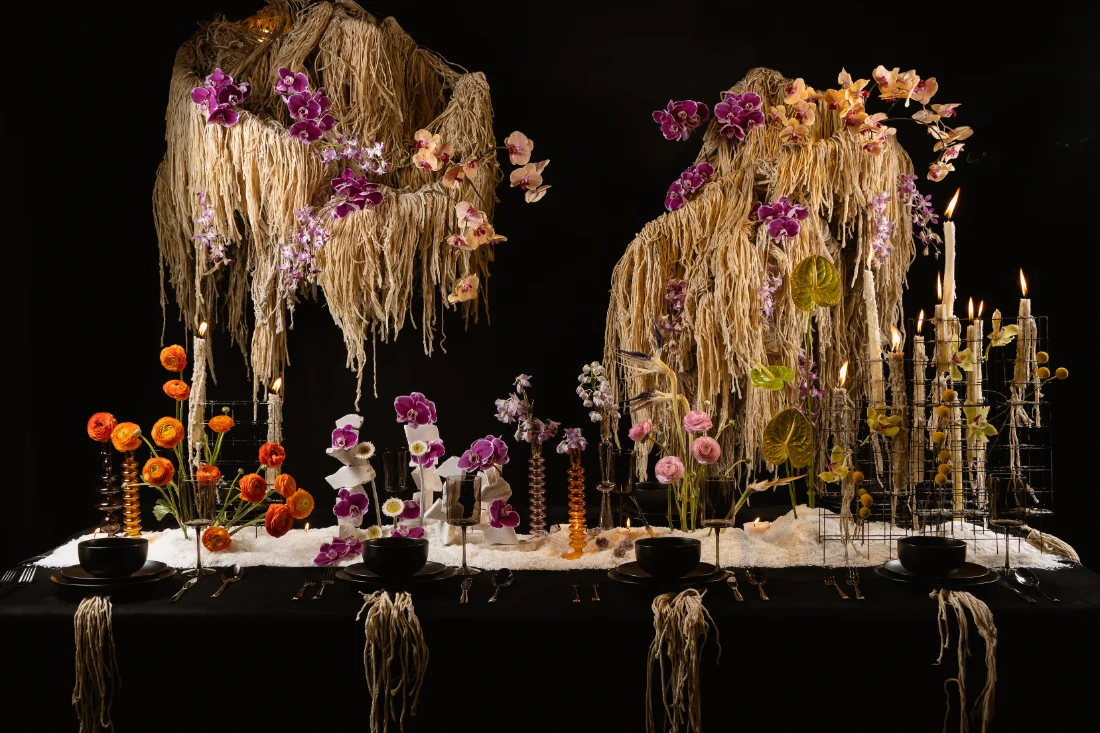
What would you say was the project that changed everything? One that marked a before and after in your career.
Good question. For me it wasn’t a project, it was the client I mentioned. Working with Mauricio. When I started, I never thought I could make a living from flowers and have a business doing this. And he gave me the push, telling me: “You have to learn to sell, and you have to believe in yourself.” He was the one who planted that in me, because he’d say: “I need you to come to my meetings and say you’re the top flower expert. Even if you don’t believe it, say it anyway.” And by saying it over and over, even though I didn’t believe it, I gradually came to believe it.
How does Mexico show up in your work?
Something that’s always present in our designs is craftsmanship. One of my life missions, quite literally, is to raise the profile of Mexico and Latin America in this world. Along the way, I’ve realized that I’ve always admired foreign designers. That’s why the fact that people today recognize our work, and that Mexico is becoming a fashionable wedding destination, motivates me to show the artistic talent we have here. It’s remarkable, even though it’s often poorly paid or undervalued.
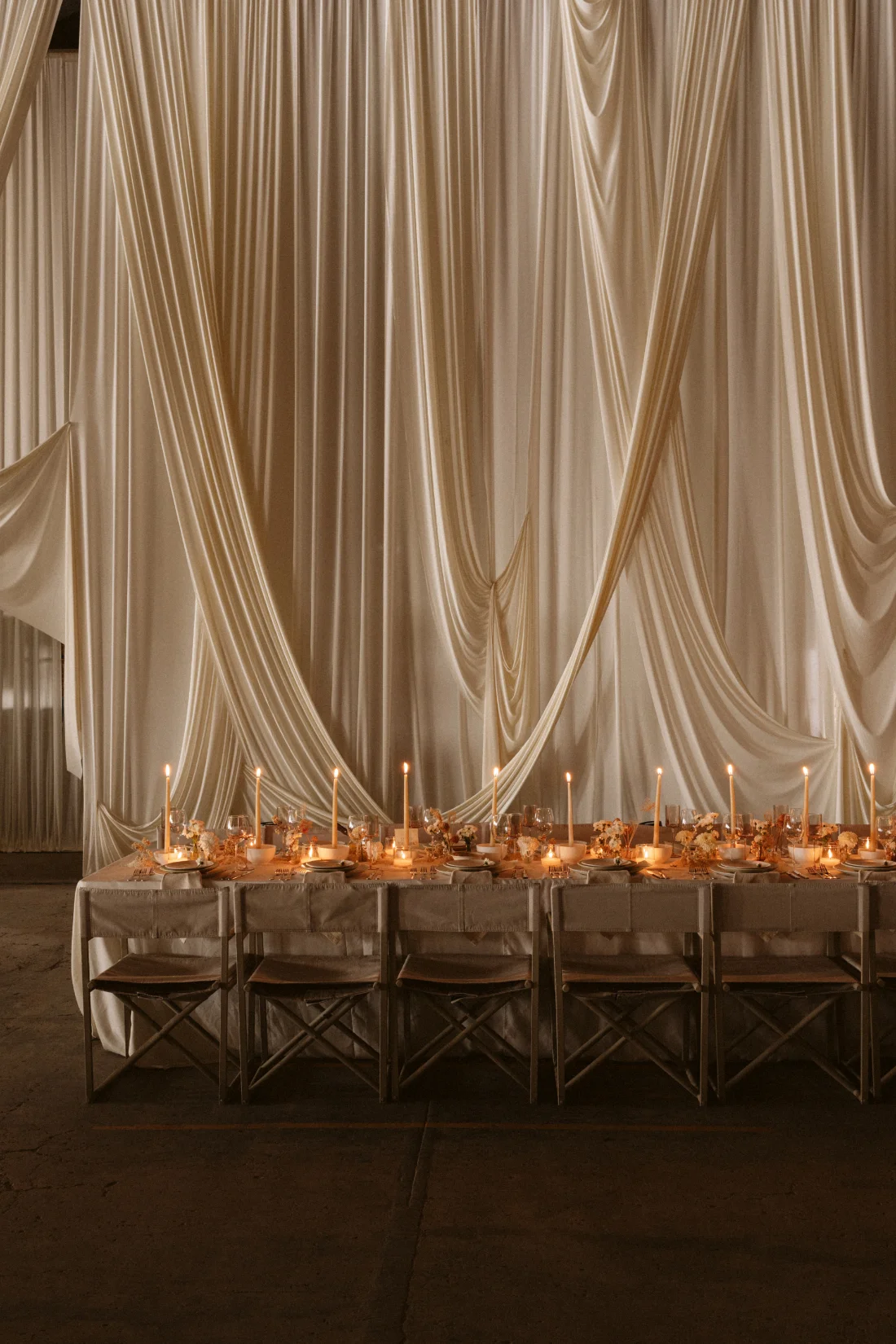
Now that you’re collaborating with international brands and couples, how do you hold on to your identity?
I think we’ve reached a point where people want our style to show. So there’s always something, even if it’s subtle, that tells you we made it. I really like exploring the surroundings and drawing on what’s around me. For example, if the wedding is in Oaxaca but the décor has nothing to do with Oaxacan style because the couple didn’t want that, I’ll still find a way to integrate it. It won’t be the main feature, but you’ll notice it. I always do that.
Is there a recent project that has particularly moved you or that you’re especially proud of?
Well, there are so many, I’m proud of all of them. A personal project: we have a new account called Creative Institute. It’s a brand we created to share more of the vision behind Michelle Pourroy Estudio Floral Creativo. I’m going to offer some online courses on how to scale your business. I love that, because it’s something I always dreamed of: creating the kind of space I would have loved to have. And today it’s becoming a reality.
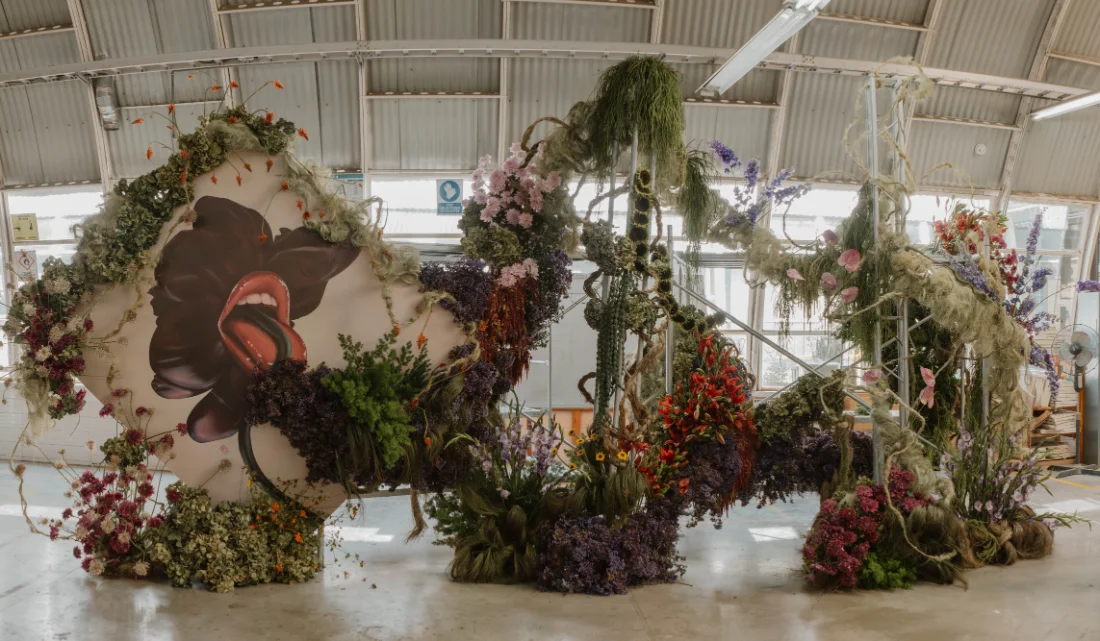
And the second project?
That’s one of them. The other is that I’m really excited about editorial work. Last year we collaborated with AD (Architectural Digest) alongside an architect I adore, Claudina Flores. I loved that collaboration because it opened doors for us to become known in the world of architects and interior designers. I’ve always loved anything to do with editorial work.
There are sustainable practices you use in your day-to-day work.
In Mexico this culture still isn’t very widespread, but we like to use nursery plants that we recycle: we take them to events, bring them back and care for them so we can reuse them. We also use a lot of chicken wire. Our biggest effort is sorting waste for composting. We don’t always manage it 100%, because we’re given very little time for breakdowns, but we separate plastic, cardboard and glass, and we take flower waste to dedicated composting sites. We do use floral foam, I’d love not to, but in very large productions, many mechanics don’t hold up or take far too long without it. When the event allows, we try to avoid it.
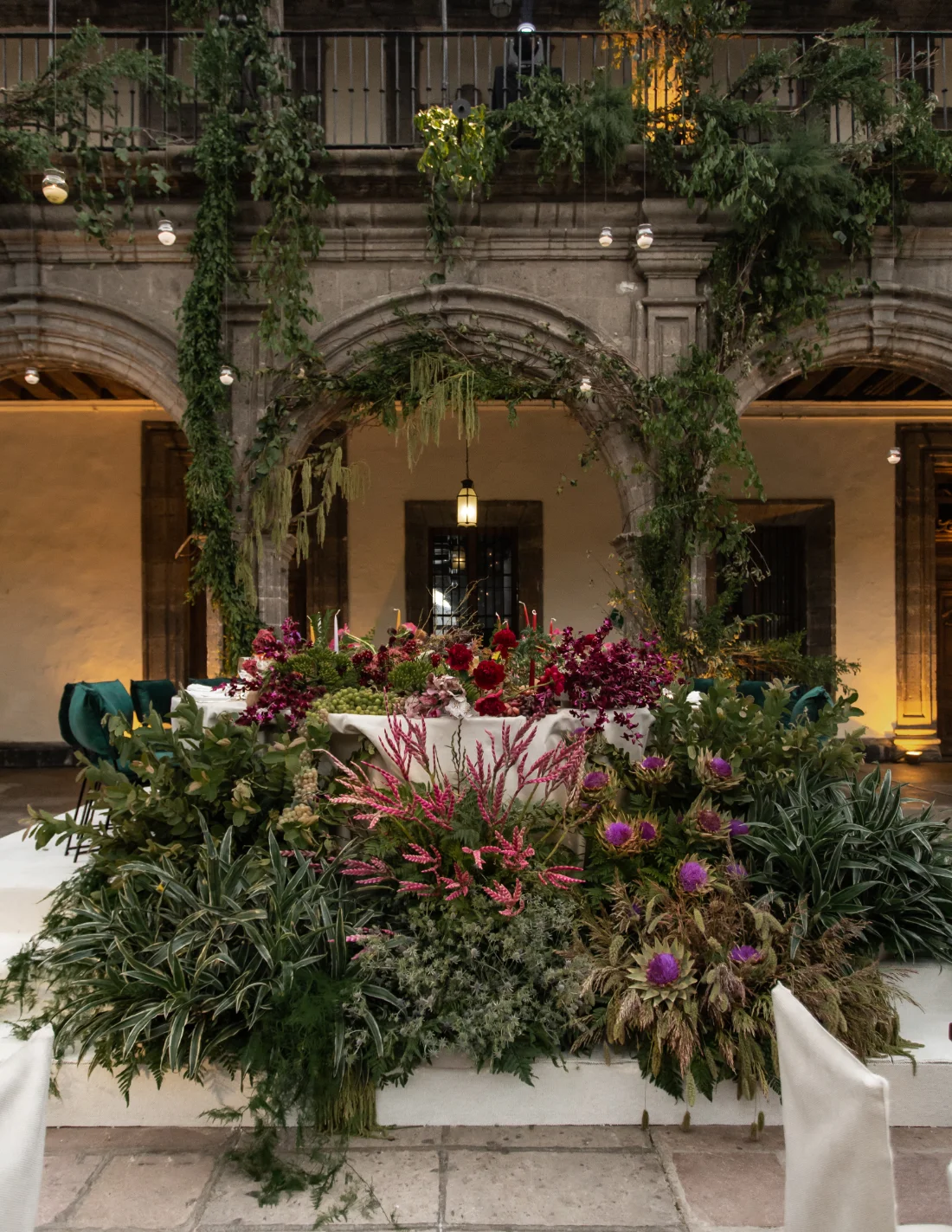
When someone sees your work, what do you want them to feel?
I like people to feel that there are more possibilities. It’s like a release. We try to make people feel amazed, so they can say: “Wow, I’ve never seen anything like this.” And this is something very personal, but for me the connection with flowers is a profound connection with God. So the wonder a flower can spark is like returning to faith. When beauty has the power to amaze you, for me that’s hope. That’s what drives me, what excites me about seeing someone love our work.