
PHKA describes itself as anti-disciplinary rather than multi-disciplinary. What is the difference?
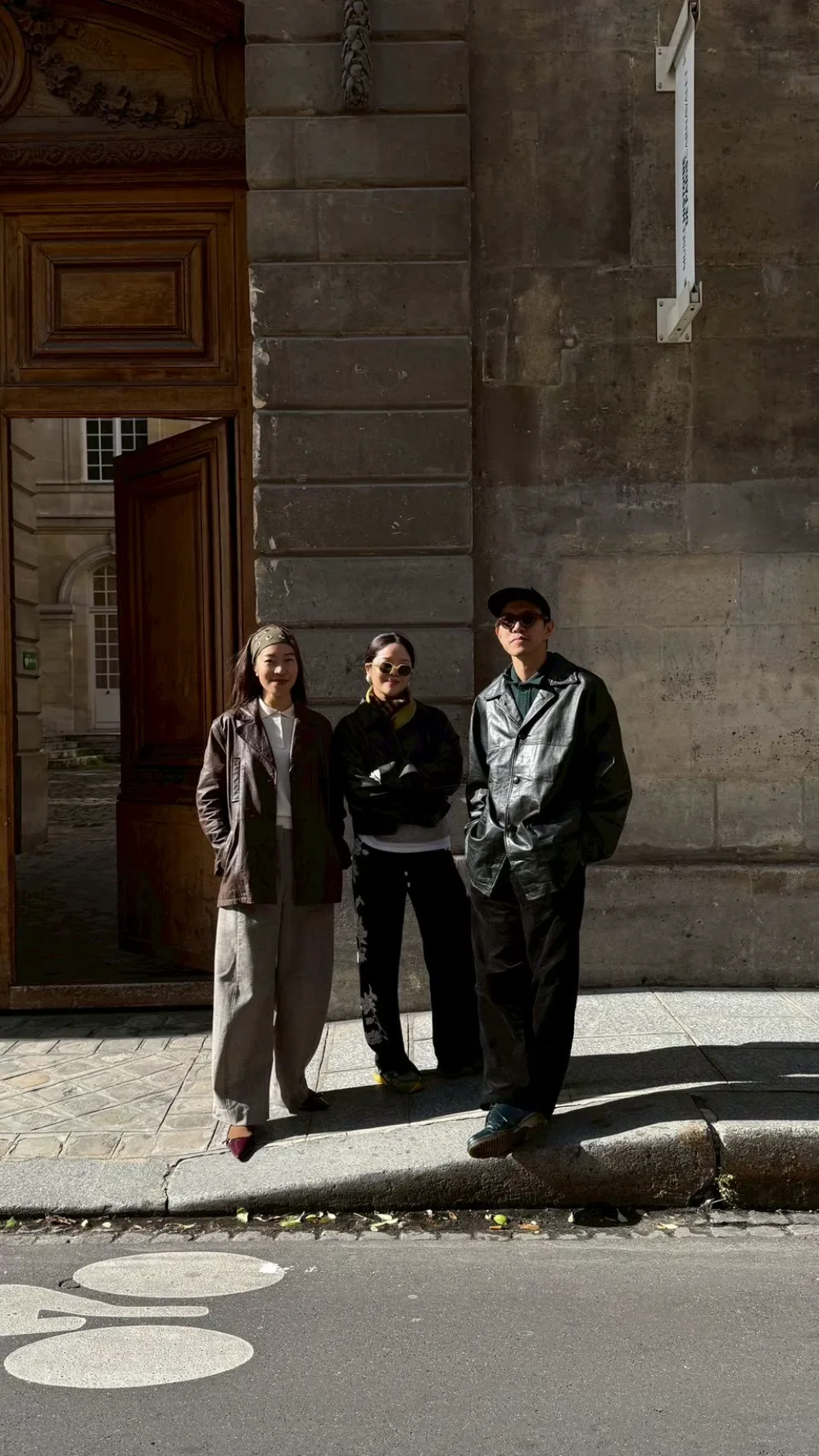
It comes from how we are built. There are 30 of us now and everyone arrived from somewhere else: I came from landscape design, Poy from interior design, other people from textiles, even political art. To work together, everyone has to let go of a part of their identity. So it is not about merging disciplines, it is closer to setting aside what we know and making something in between. Which also means what we do cannot be pinned down. It is not floristry, it is not floral design, we just fall somewhere in between, and we always have.
How do you decide which discipline leads on a project?
It depends on the client, we work from their requirements, the brief, the budget. For a wedding it starts with the couple. For a brand it depends. Is it a fashion show? A presentation? A pop-up with just a few flowers? The brief sets the criteria and we develop from there.
Your work is so undeniably PHKA. How did you build an aesthetic that is so recognisably yours?
I don’t think we have a signature style, we are not consistent in that sense. What makes us different is that we are a collective, so everything is a mixture of all of us, and that shows up in how we conceive a project rather than in a look. Staying consistent is the real challenge, especially after more than ten years. Trends keep arriving. A year or two ago everyone was using fruit. Do you follow that and do it too, or ignore it completely and never touch fruit? You have to find the balance and stay true to what matters to you. Not following the trend, not imitating anyone. That is the thing we keep in mind, and that is how identity develops on its own.
Was there a project that changed everything for PHKA?
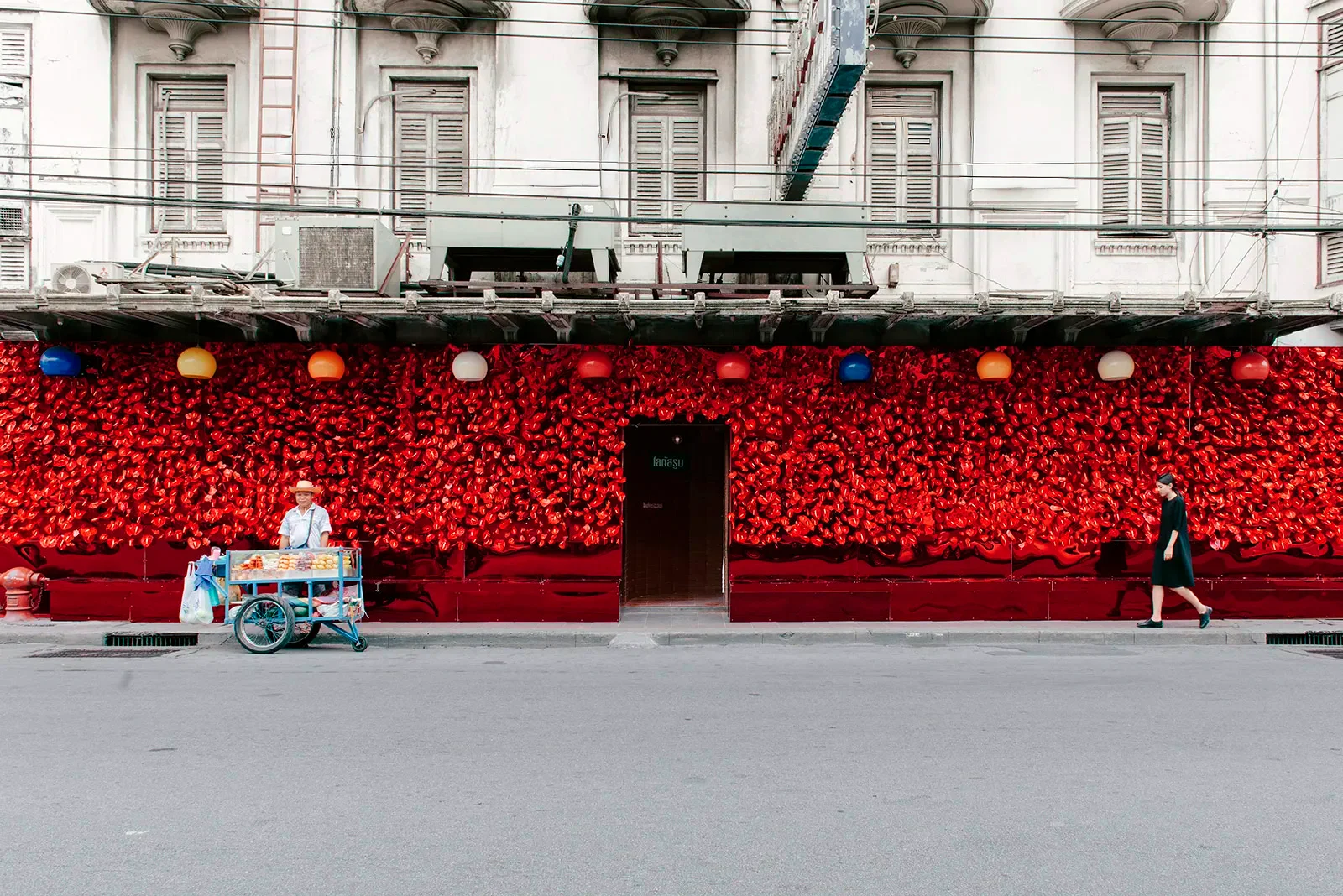
Yes, in 2018. We started the studio in 2013, so five years in. Those first five years were all commercial work and weddings, mostly in Bangkok, and something was missing. What we had wanted from the beginning was flowers in a space that could transform it, something nobody had done before, open for anyone to come and see with their own eyes rather than for one small group. So we made a public installation ourselves, called Abandoned One, the one with the red anthuriums. There was no budget at all, so we invested everything and did the whole thing ourselves. It went viral, everyone saw it. It got us into a Phaidon design book, and I think it is part of what eventually took us to Flora. It means a lot to me. I even have a tattoo of it on my arm.
“When working on a project, 70% is thinking, 30% is executing.”
What inspires the work?
Anything to do with space and environment. Architecture, interiors, landscape. Fashion, fine art, contemporary art. And the seasons, which is new for us. In Bangkok the seasons barely register. Green stays green all year. Since moving to Paris we see it differently. Mimosa used to be mimosa, nothing more. Here, at the end of winter when the weather warms slightly, you see a few tiny dots of yellow starting, barely blooming, and you feel that spring is coming. It becomes something else entirely, not just a material we use.
Can you tell us about a recent project you loved?
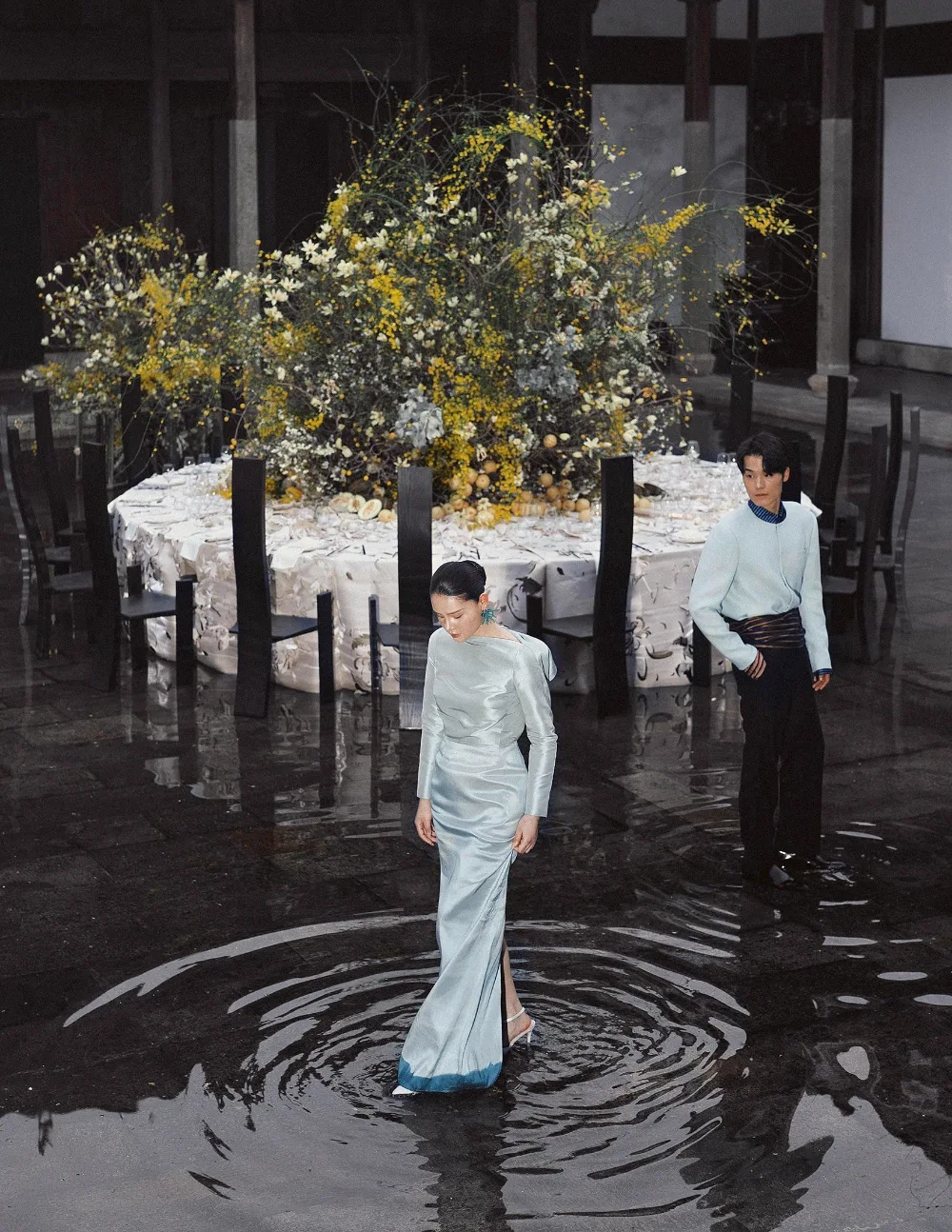
A workshop we did earlier this year in Shanghai, called Silence. It was our first workshop focused only on weddings and our first in China. We set the context, the Chinese tea ceremony, brought props and materials, and then let everyone make their own version of it. The part I enjoy most is the cultural exchange. We do not really like the word teaching, we are not masters or experts in any of this. We have experience and that’s what we share: how we conceive a project, how we develop it, how we execute it, but not so much technique. And we get the same thing back, we learn something from the participants every time, and they learn from each other as much as from us.
What meaning does your material carry?
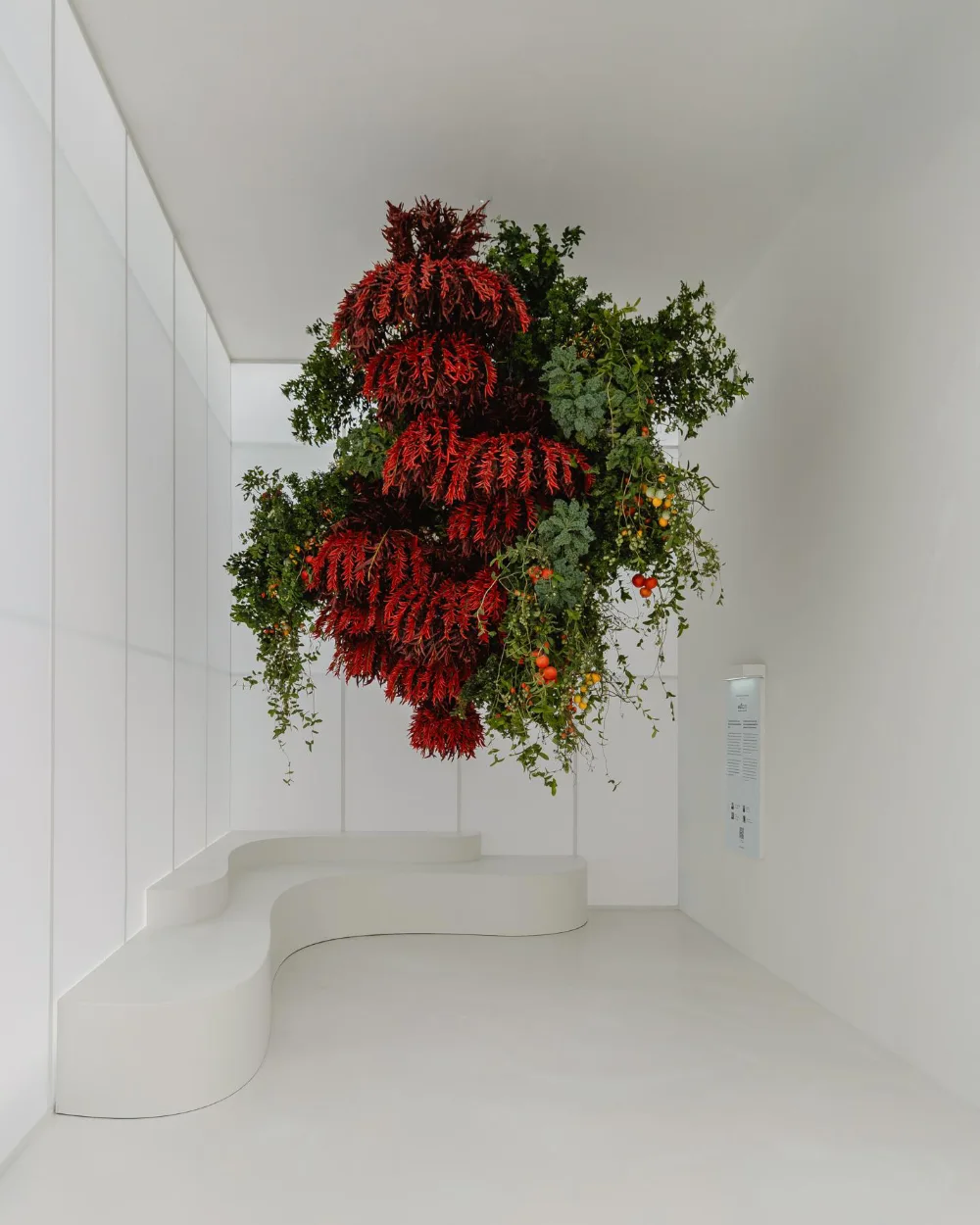
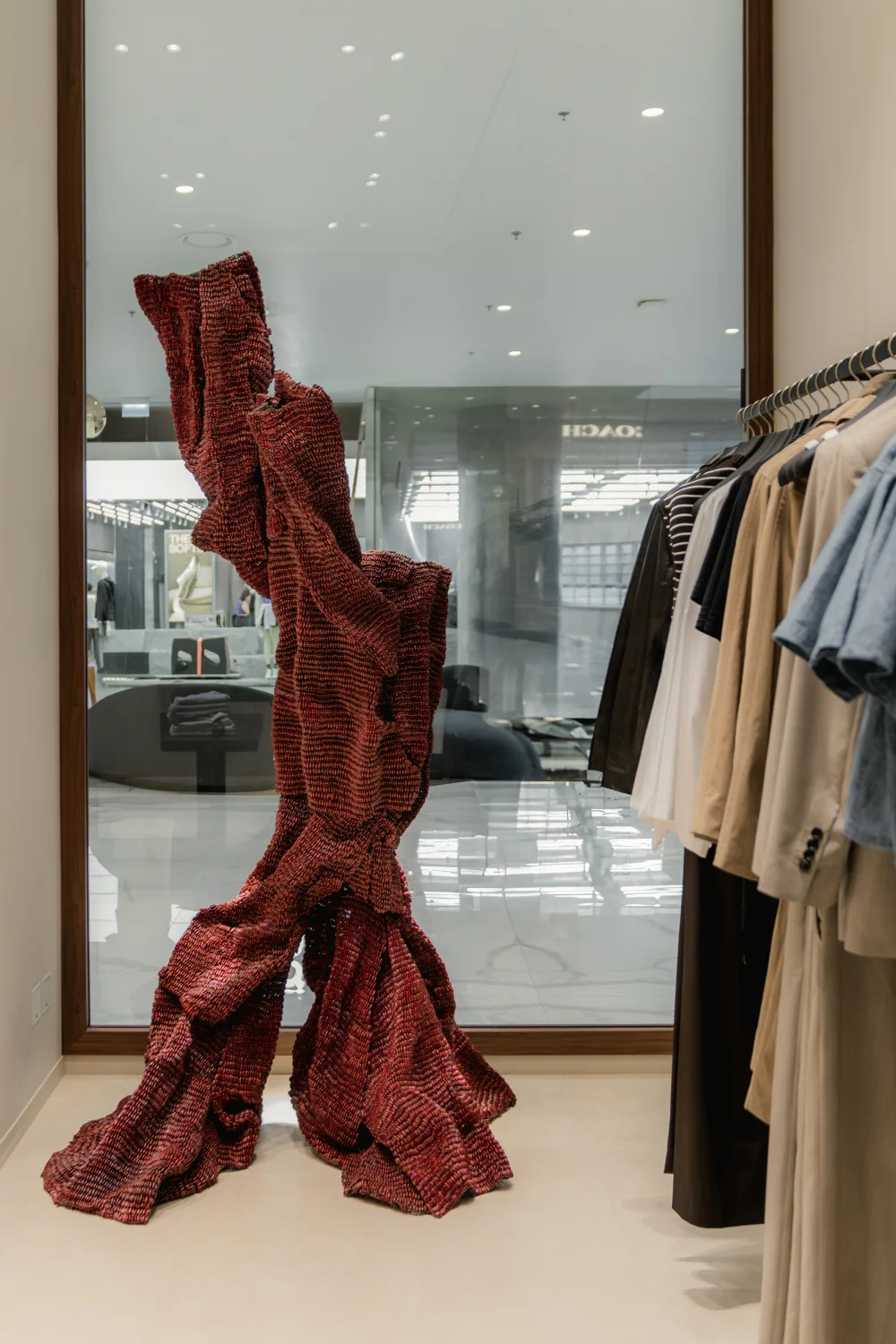
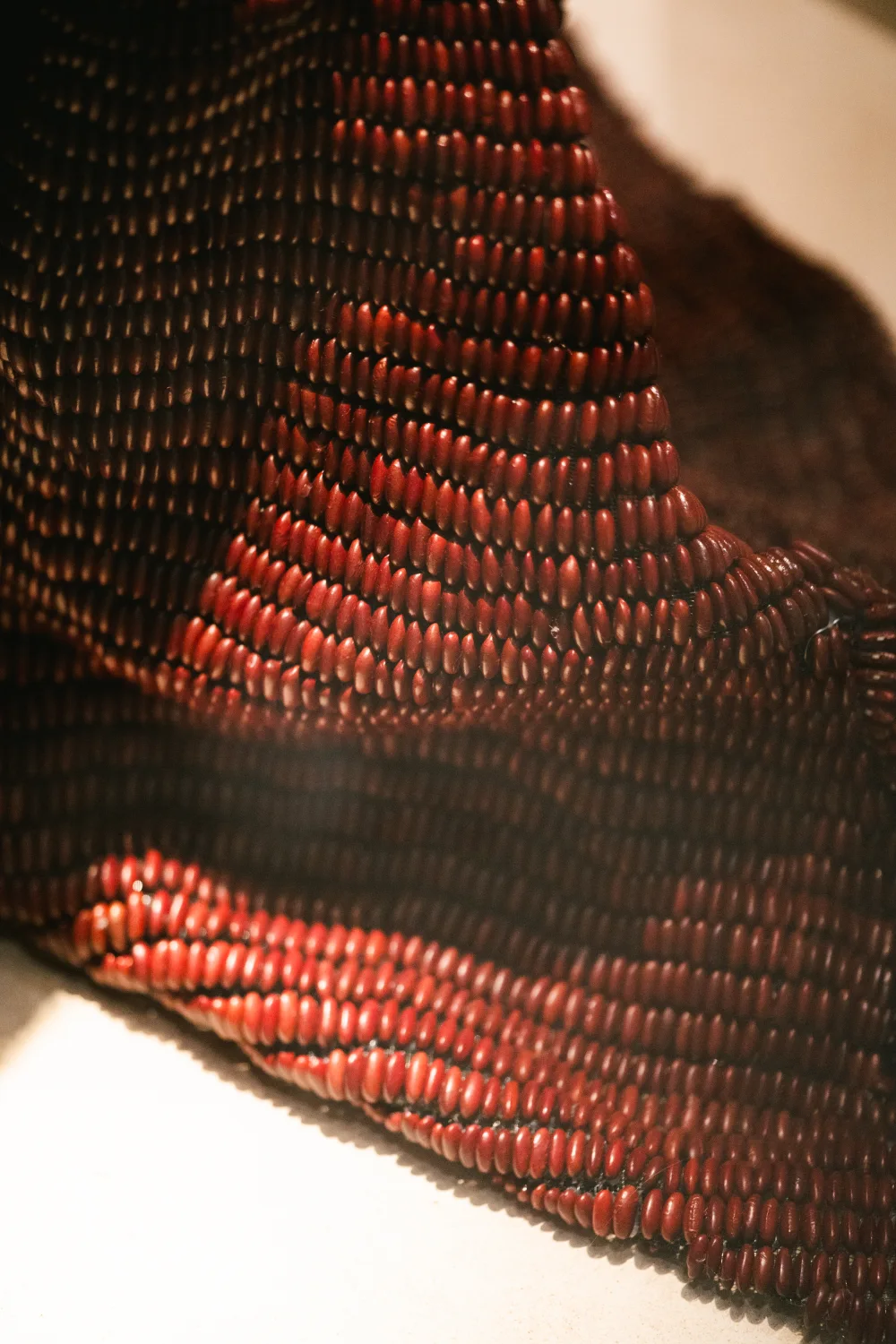
Choosing material is a huge part of the work and we spend a lot of time on it. Within one project different materials play different roles. Some cheap material to fill the volume. Some beautiful material, the flowers, as the highlight. And then material that defines the concept and the direction, which sometimes carries a meaning behind it too. In one project it might be only anthurium, and then it has to be anthurium, nothing else. Ideally it is also local. If a project happens in Thailand there is no reason for everything to come from the Netherlands.
Working locally is one of the most sustainable things a florist can do. What other sustainable practices do you work with?
No floral foam at all, zero. For mechanics we always use reusable or DIY structures. We have just bought the reusable framework by Florésie. When we use them with chicken wire and water tubes, we reuse the pipettes as well. The flowers themselves can usually only be used once, so the question is what else can be saved. Sometimes we work with plants or trees still in soil, with their roots, and then they come back to the studio afterwards.
What would you like someone to take away from your MADRID BLOOMS workshop?
Our work is mainly about how we conceive a piece and how we then realise it. When working on a project, 70% is thinking, 30% is executing. So I hope participants get to see that whole process, from the very beginning through to the finished project they have seen on the website or on our Instagram.
What do you think is the most valuable part of a space like MADRID BLOOMS?
It is a different kind of place. There are institutions that train you properly, floristry schools where you learn the rules: how to condition a flower, how to lift a bucket without hurting your back. Very practical, and useful. MADRID BLOOMS does something else. It brings together leading creatives from all over the world, this edition from Mexico, South Korea, Spain, and each of them looks at material differently. Gabriela Sagarminaga for example, works with her own material and sees it in a way that is nothing like ours. That difference is the whole point. Everyone exchanges how they see material and how they approach their own projects, and over three days that is a lot of perspectives.
When someone sees your work, what do you want them to feel?
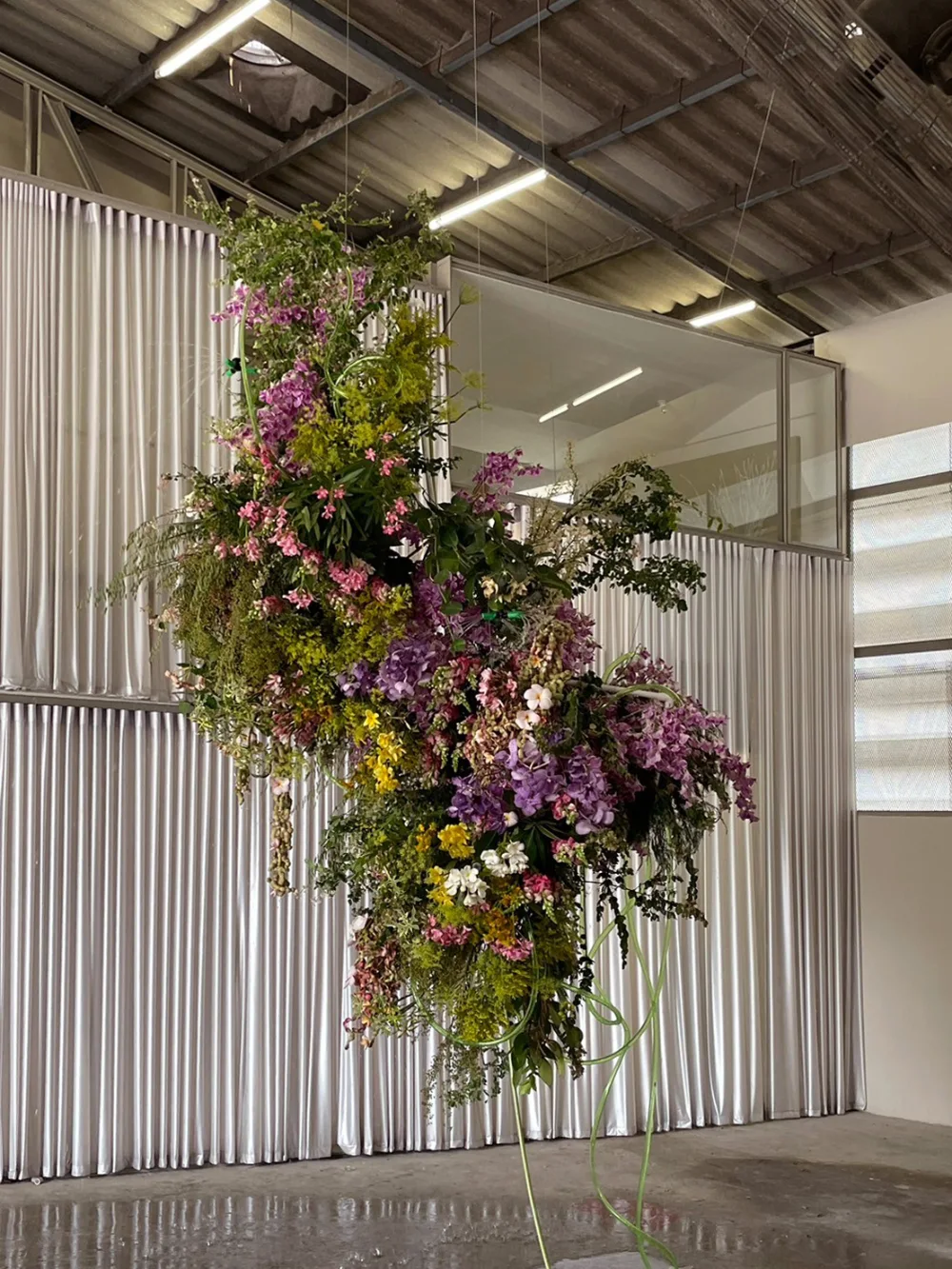
Every florist wants their work to be beautiful. Beyond that, because our work is about space and environment, I keep coming back to a framework by Rachel and Stephen Kaplan on the experience of nature. It has four qualities: coherence, complexity, legibility and mystery.
Coherence means it makes sense. You understand from the first moment what you are looking at. Complexity means the right level of detail, something that keeps giving you more when you look closely. Legibility matters most in scenography, when there is a series of scenes to move through. It works like a film, act one, act two, the build before the climax. And mystery, which is the one we think really counts. They do not need to understand it. They just think, what is that? I have never seen anything like it before. We try to have all four. Sometimes we only manage three, and then it is good, but not good enough.